



An honest guide — what acoustic panels can do, what they can't, and when you may need more
Sound Absorption vs. Sound Insulation — The Most Important Difference
✅ Sound Absorption (what acoustic panels can do)
• Help reduce reverberation in a room
• Help minimize echo and flutter echo
• Contribute to clearer speech
• Support better TV and music sound
• Improve video call quality potential
• Create a generally "quieter" feeling
Principle: Sound hits the panels and is converted into heat → fewer reflections → less reverberation.
❌ Sound Insulation (what they generally cannot do)
• Block neighbor noise
• Keep out street noise
• Keep music fully inside the room
• Reduce impact noise from above
• Eliminate deep bass
• Make apartments "soundproof"
Principle: Sound insulation typically requires mass (heavy materials like concrete, gypsum, double walls). Thin acoustic panels generally do not provide enough mass for that purpose.
What Acoustic Panels Can Actually Do
| Situation | Without Panels | With Panels (1 Accent Wall) | Potential Improvement |
|---|---|---|---|
| Speech intelligibility | Moderate (echo interference) | Often clearer voices | Can be noticeable |
| TV sound (movies) | Thin, echoey | Tends to feel fuller, warmer | Often immediately noticeable |
| Video call microphone | Echoey, "bathroom effect" | Usually more professional, clearer | Colleagues may notice it |
| General noise level | Normal | Can feel noticeably calmer | Room may feel more pleasant |
| Neighbor noise (airborne) | Loud | Minimally affected | Typically barely noticeable |
| Impact noise from above | Loud | Generally unchanged | Little to no effect |
The table illustrates an important point: acoustic panels are best suited for addressing sound behavior inside the room (reverberation, speech, sound quality) — and are generally not effective against sound coming through walls, ceilings, and floors.
When Acoustic Panels Can Be the Right Solution
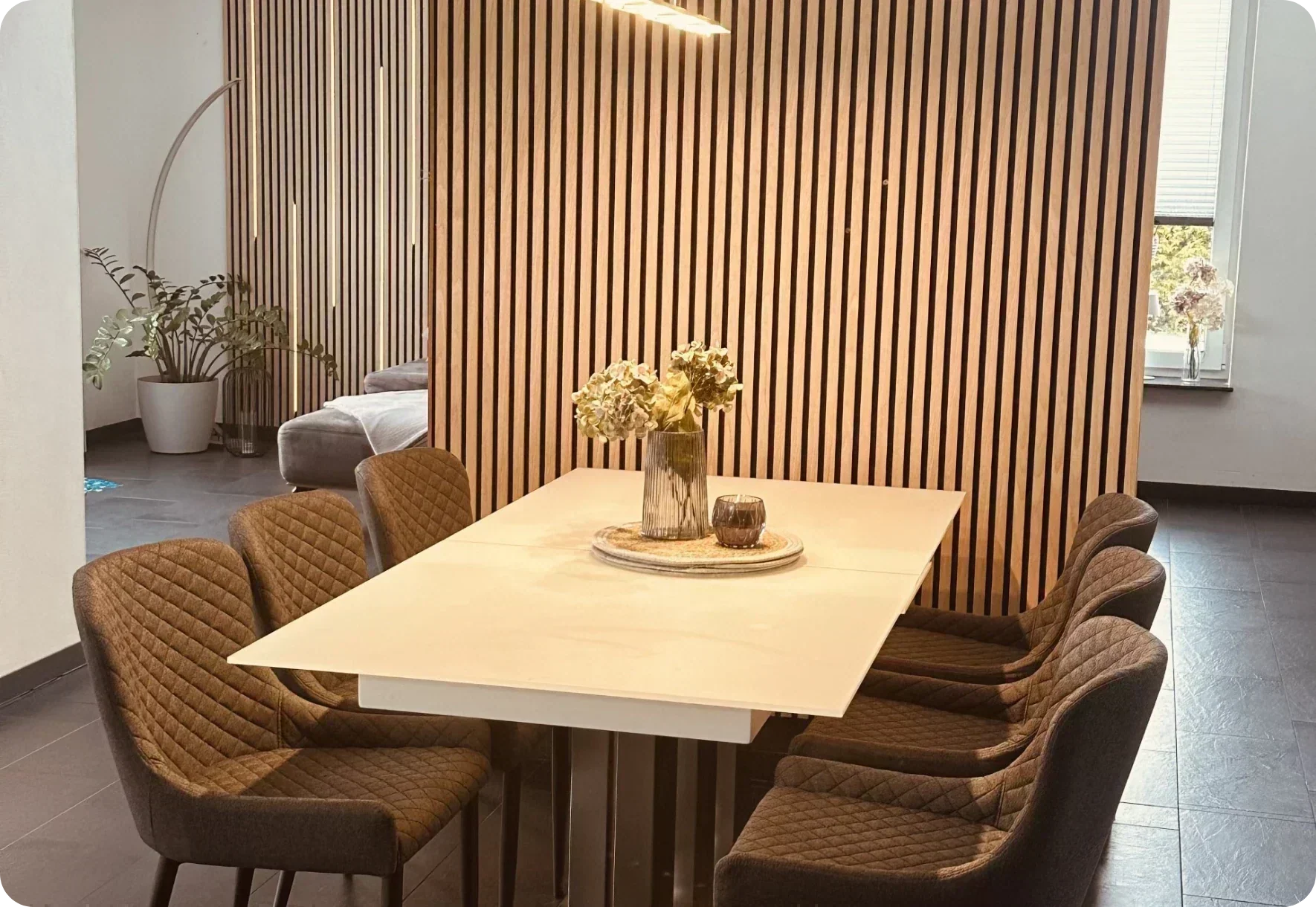
Your living room feels echoey — especially with hard floors (tiles, parquet, laminate) and large window surfaces. An accent wall with several panels can help reduce reverberation. This is one of the most common and successful use cases.
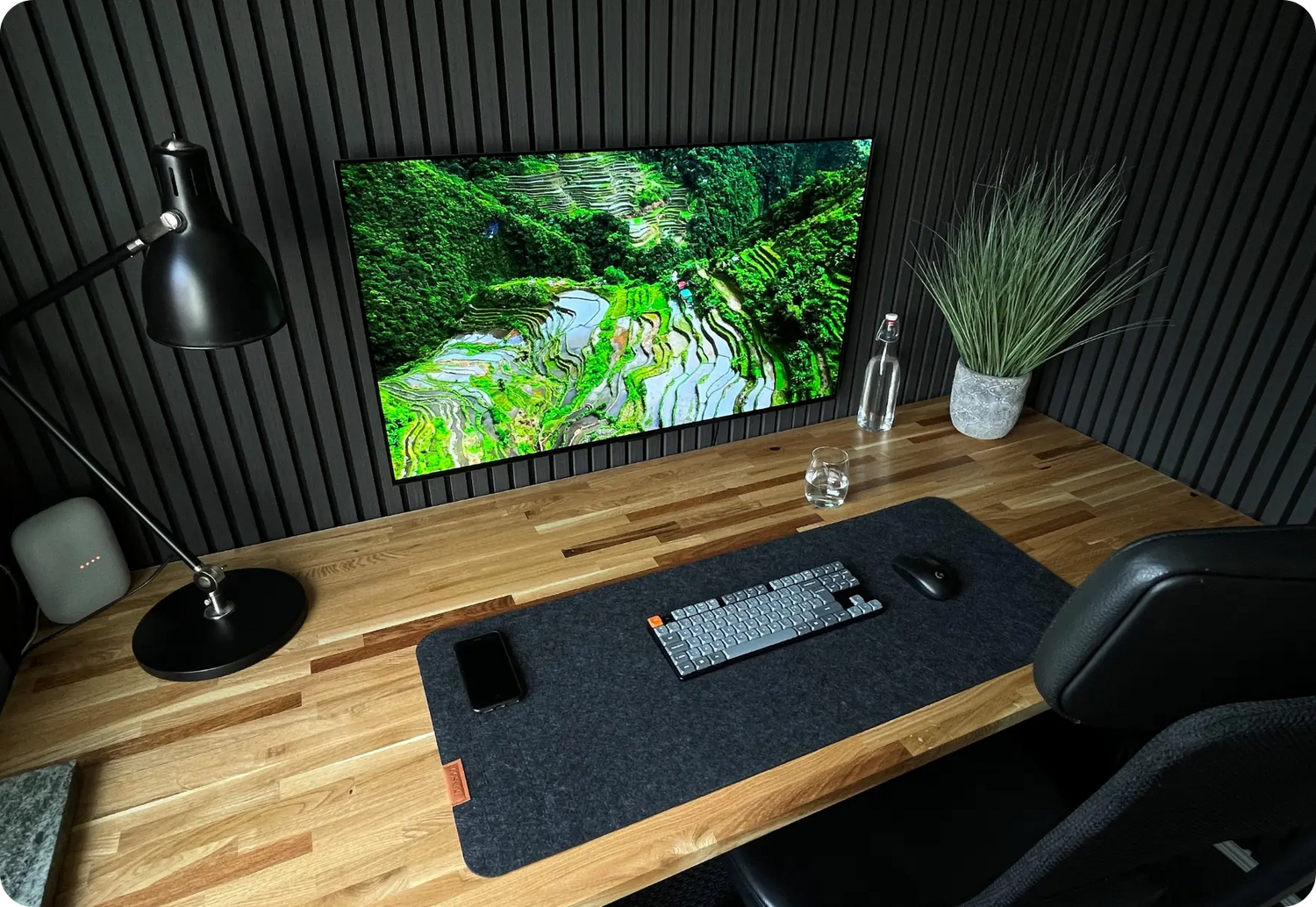
Your home office sounds echoey in calls — a few panels behind your desk may help reduce the reflections picked up by your microphone. Many users report that colleagues notice the difference.
Your hallway creates tunnel echo — parallel walls and hard floors can turn every step into a booming sound. Panels on one side can help break the tunnel effect.
Your open-plan layout feels too loud — kitchen noise may carry into the living room. Panels at transitions or as a room divider can help create more defined acoustic zones.
When You May Need More Than Panels
Neighbor noise: If you hear music, voices, or TV from neighbors, that is typically airborne sound passing through the wall. In these cases, added mass is usually the most effective solution: a secondary stud wall (gypsum board + mineral wool) can potentially improve sound insulation significantly.
Impact noise: Footsteps from the apartment above. Acoustic panels on the ceiling are generally of little help here — impact noise is structure-borne sound transmitted through the building structure. The typical solution is impact sound insulation under the upper floor screed, which can be structurally complex and is often not retrofittable in older buildings.
Deep bass: Low frequencies are typically difficult to absorb with thin materials like felt. For bass issues, thicker absorbers (bass traps) in room corners are usually more effective. Standard acoustic panels are generally best suited for mid and high frequencies.
Getting the Most Out of Your Panels
Place on the largest reflection surface: The wall opposite your sound source (TV, speakers, conversation partner) is often the most important. That's where most direct reflections tend to occur.
Treat first reflection points: Sit at your listening position and have someone hold a mirror flat against the wall. Wherever you can see the speakers or TV in the mirror are "first reflection points" — panels tend to be most effective there.
Combine different surfaces: Wall + ceiling may be more effective than wall alone. Two opposing walls can work better than one. The more surfaces you treat, the more balanced the acoustics tend to become.
Frequently Asked Questions
Acoustic panels are designed to absorb sound within a room, not to block sound between rooms. The difference: absorption = less echo inside. Insulation = less noise from outside. For insulation, heavy building materials (gypsum, concrete, mineral wool) are typically needed, not thin panels.
Only marginally. Neighbor noise is airborne sound passing through walls — and added mass is usually what helps most. However, acoustic panels may reduce reverberation in your room, which could make neighbor noise feel slightly less intrusive because there is less internal echo amplifying it.
Results depend on many factors — room size, existing materials, panel placement, and coverage area. In a typical room, an accent wall can potentially reduce reverberation time meaningfully. Subjectively, many users describe a noticeable change: speech tends to become clearer, music can sound fuller, and the room often feels calmer overall.
NRC (Noise Reduction Coefficient) is a standardized measure that indicates how much sound a material can potentially absorb under test conditions. Higher values represent greater absorption potential. Different materials have different NRC ranges — from very reflective surfaces like concrete, to highly absorbent materials like dedicated studio absorbers.
For most homes: typically no. An accent wall with several panels can often improve acoustics meaningfully without the need for frequency analysis or professional measurements. A specialist is generally recommended for professional studios, conference rooms, restaurants, or cases where issues persist despite treatment.
Conclusion: Realistic Expectations, Real Results
Acoustic panels are not a miracle solution for neighbor noise — but they can be among the most effective solutions for echo, reverberation, and poor room acoustics inside your four walls. For most residential situations (echoey rooms, video calls, open layouts), they may be exactly the right fit. And they also happen to look good.
Make your room feel quieter — start with an accent wall.
Discover all acoustic panels → Free sample box →Acoustic performance depends on many factors including room size, materials, placement, and coverage. Results may vary between installations. Information in this article is intended as general guidance and does not constitute guaranteed performance specifications. Prices shown are subject to change and may vary over time.



Leave a comment
This site is protected by hCaptcha and the hCaptcha Privacy Policy and Terms of Service apply.