




What distinguishes wooden acoustic panels from purely decorative panels — and how to make the right choice
What Are Wooden Acoustic Panels?
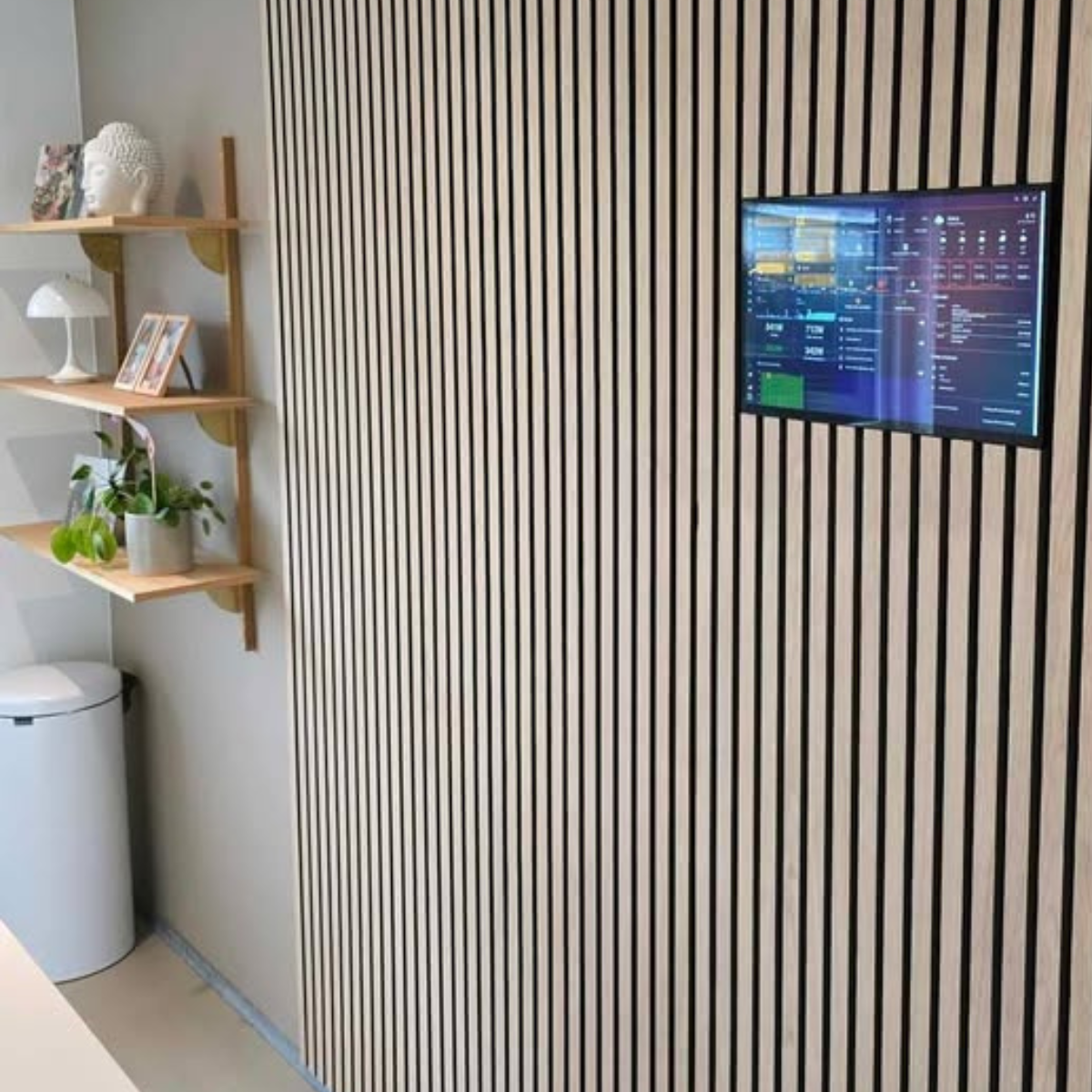
Wooden acoustic panels are wall cladding elements with a dual function: they can enhance the visual appearance of a room through a high-quality wood surface, and help improve acoustics by reducing echo and noise. The typical construction consists of three layers:
Surface layer — Real oak veneer
Real oak veneer (0.3–0.6 mm) with natural grain. The slatted structure (vertical grooves) can help disperse sound and contribute to a more balanced sound experience in the room.
Core material — MDF
MDF (medium-density fiberboard), 12–18 mm thick. Provides stability and shape retention. MDF is generally easy to cut and work with.
Backing — Felt or acoustic fleece
Felt or acoustic fleece (up to 10 mm). This is the key layer for acoustic performance. The felt can help absorb and dampen sound waves that pass through the gaps between the slats. Without this layer, the panel is purely decorative — with it, it becomes a functional acoustic solution.

Acoustic Panel vs. Decorative Panel: The Difference
| Feature | Acoustic panel (with felt) | Decorative panel (without felt) |
|---|---|---|
| Acoustic effect | Can help reduce echo and noise | Minimal to no effect |
| Room comfort | Can improve sound experience | No noticeable improvement |
| Backing | Felt or fleece (up to 10 mm) | Bare MDF or thin foil |
| Weight | Slightly heavier | Lighter |
| Price | Includes acoustic function | Decorative only |
| Use case | Design + improved acoustics | Design only |
How Does Sound Absorption Work?
Sound hits the panel surface and travels through the gaps between the slats into the felt behind it. The felt can help dampen the sound energy, which reduces echo and contributes to a more comfortable acoustic environment. Generally, the deeper the grooves and the thicker the felt, the more noticeable the effect can be.
Which sounds are affected? Panels with felt backing tend to be especially effective at reducing everyday noise such as voices, TV sound, and general room echo. This can make conversations clearer and improve overall comfort in the room.
Material: Real Oak Veneer
The visible surface is made from real oak veneer — one of the most popular choices for modern interiors. Oak offers a natural, warm appearance and can fit seamlessly into both classic and contemporary spaces.
Silentwood offers multiple oak finishes, including Light Oak, Light Brown Oak, Smoked Oak and Black Oak, making it easier to match your interior style. For help choosing: color guide.
Where Are Wooden Acoustic Panels Suitable?
Generally, for any indoor space where echo may be an issue or a design upgrade is desired. They can be especially effective in rooms with:
Hard floors (tiles, laminate, wood) — these surfaces tend to reflect sound almost completely. Panels on one wall can help balance the acoustics.
Open-plan layouts — sound travels freely. Panels can help create a more comfortable and controlled sound environment.
High ceilings — more space can mean more echo. Panels may help reduce this effect.
Home offices — for potentially clearer calls and better focus. More: home office guide.

Installation: Simple and Fast
Wooden acoustic panels are mounted directly onto existing walls — no demolition, no renovation, no professional typically required. Two main methods:
Adhesive (often ideal for renters): Apply mounting adhesive to the back, press onto the wall. Generally works on drywall, wallpaper, and plaster. Full guide: installation guide.
Adhesive + screws (maximum stability): Add screws through the slat gaps for extra hold, especially recommended on ceilings or solid walls.
Installation time: approximately 15 minutes per panel. A 3 m feature wall can typically be completed in a few hours.
Cost and Price Comparison
| Supplier type | Material | Price/panel | 3 m wall (6 panels) | Acoustic effect |
|---|---|---|---|---|
| Amazon budget | Plastic | €5–10 | €30–60 | ❌ Minimal |
| DIY stores | Foil on MDF | €15–25 | €90–150 | ⚠️ Limited |
| Silentwood | Real oak veneer + felt | from €20.99 | from €96 | ✅ Noticeable improvement |
| Premium brands | Real wood veneer + felt | €30–45 | €180–270 | ✅ Noticeable improvement |
| Custom carpentry | Solid wood | €50–100 | €300–600 | ⚠️ Limited without felt |
Conclusion: Wooden Acoustic Panels — Design + Function
Wooden acoustic panels can combine aesthetics with improved room comfort. With real oak veneer, a felt backing, and easy DIY installation, they are often one of the simplest ways to help reduce echo and upgrade the look of a space.
Acoustic performance depends on many factors including room size, existing surfaces, panel placement and coverage area. Results may vary between installations. Prices mentioned correspond to the current prices at the time of publication and are subject to change.



Leave a comment
This site is protected by hCaptcha and the hCaptcha Privacy Policy and Terms of Service apply.