



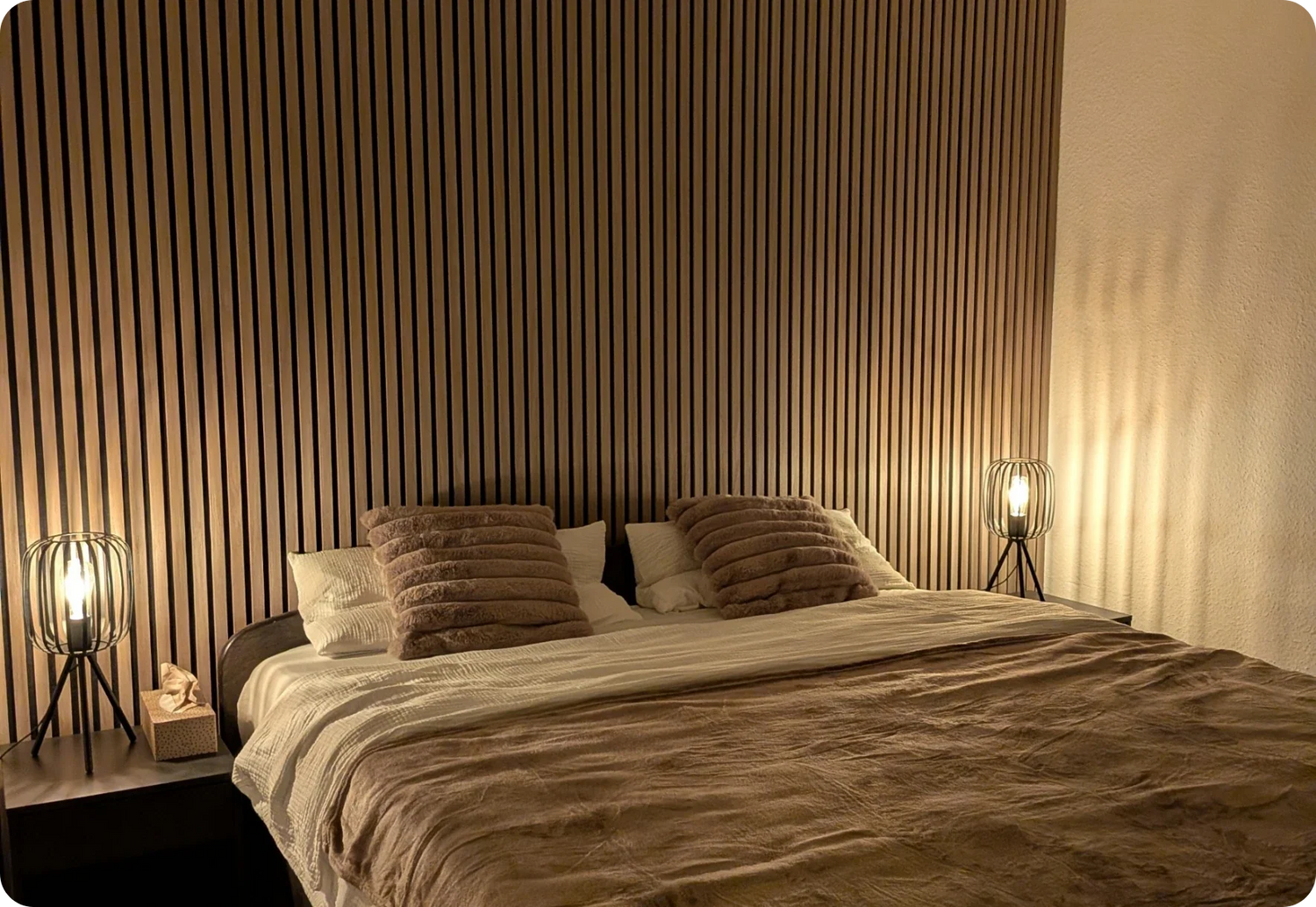
An acoustic panel headboard wall solves three problems at once - empty wall, hard echo, and missing warmth. Here's how to choose the layout, tone, and mounting that fits your bedroom.
Why panels instead of a traditional headboard
A traditional upholstered headboard sits behind your bed and stops there. The wall above it stays empty - paint or wallpaper, sometimes a piece of art, often nothing. The headboard collects dust, fades with the years, and becomes part of the bed frame you have to deal with when you move.
An acoustic panel headboard wall takes the same space and does more with it. The panels run from mattress height (or the floor) all the way to the ceiling. The wall becomes one continuous design feature - visual anchor, sound absorption, and warmth in one. There's no separate headboard furniture, no fabric to clean, and no awkward gap between headboard and ceiling.
4 ways to design a headboard wall
1. Floor-to-ceiling, bed-width
The most common setup. Panels run from the floor (or just behind the mattress) to the ceiling, in a width slightly wider than the bed. For a 160 cm bed: 3 Premium panels. For a 200 cm king: 4 Premium panels. Clean, intentional, and works in any bedroom shape.
2. Full wall, edge to edge
Panels cover the entire wall - beyond the bed width. Works best in bedrooms wider than 3 m. Adds visual weight and slightly more sound absorption. Pair with bedside tables that have visible legs or are wall-mounted to avoid breaking the panel line.
3. Headboard-height only
Panels run from mattress height to roughly 180-200 cm - stopping below the ceiling. Mimics the proportion of a tall upholstered headboard but with the texture and acoustics of real wood. Best when ceiling height is over 270 cm and a full-height wall would feel overwhelming.
4. With LED backlight
An LED strip behind the top edge of the panels creates an indirect glow that replaces bedside lamps. Boutique-hotel atmosphere with minimal effort. The 21 mm panel depth easily hides standard LED strips and the power cable. Use warm white (2700K-3000K) for bedrooms - cool white feels clinical.
Choosing the right tone for a headboard wall
The wall behind the bed is the largest visible surface in a bedroom - and the first thing you see when you walk in. Tone choice matters more here than in most other rooms.
| Tone | Atmosphere | Pairs well with |
|---|---|---|
| Smoked | Deep, warm, hotel-like | Most bedrooms - works with grey, white, dark green, and warm interiors |
| Light Brown | Warm, golden, natural | Wood floors, linen bedding, earth-tone palettes |
| Light | Bright, fresh, open | Small bedrooms, north-facing rooms, Scandinavian interiors |
| Black | Dramatic, modern | Large bedrooms with strong natural light and bold design language |
For a complete tone-by-tone breakdown including pairing examples: wood veneer tones guide.
Practical considerations
How many panels - and what size?
A Premium panel measures 242 × 60.5 cm. For a standard 160 cm bed: 3 Premium panels for the headboard area. For a 200 cm king bed: 4 Premium. Standard panels (52 cm wide) give you slightly more flexibility for non-standard wall widths but need one extra panel for the same coverage.
Ceiling height
Premium panels are 242 cm tall - the standard ceiling height in most modern homes. For taller walls, panels can be combined with a horizontal cut strip at the top or bottom. For shorter walls, panels need to be trimmed at the top with a circular saw or jigsaw. The cut edge is hidden against the ceiling.
Mounting method
Renters: adhesive only. No drill holes, removable when moving out. Owners: adhesive plus screws (15 per panel, hidden in the slat grooves) for maximum security. Both methods work on drywall, plasterboard, and most painted walls.
Frequently asked questions
Yes - this is one of the most popular bedroom uses. Mount the panels from the floor (or mattress height) to the ceiling, directly behind the bed. The panels become both the visual headboard and a sound-absorbing surface. No separate headboard furniture needed.
Yes, ideally the headboard or pillows are positioned against (or very close to) the panels. The wall serves as both visual backdrop and headboard - pushing the bed away creates an awkward gap and breaks the design intent.
The wood veneer surface is durable for normal use - including pillows pressed against it. Avoid direct rubbing of metal zippers or hard objects against the panels, and dust occasionally with a soft cloth. The slats are tightly bonded and don't shift under pressure.
Yes. Two options: (1) Wall-mounted reading lamps drilled directly into the wall behind the panels (panels are pre-cut around the mount point). (2) Plug-in lamps clipped to a floating shelf or bedside table - no panel modification needed.
You can hang art on a panel wall, but it competes with the slat rhythm and grain pattern. Most installations look best with the panels as the visual focal point, and any art or decoration placed on adjacent walls. If you want art on the panel wall, choose a single large piece rather than a gallery arrangement.
Dust occasionally with a soft cloth or vacuum brush attachment, following the direction of the slats. Wipe with a slightly damp cloth if needed - avoid soaking. Wood veneer is forgiving of light cleaning but should not be exposed to standing water. More: maintenance guide.
The wall that does the work of three pieces of furniture
A traditional bedroom usually has three separate elements behind the bed: a headboard, sometimes a shelf or framed art, and an empty wall above. An acoustic panel wall consolidates all of that into one continuous surface - visually unified, acoustically active, and dramatically simpler to live with.
The panels you choose will sit behind your pillow for years. The tone is the only decision that really matters, and the only way to make it correctly is to see the real material in your own light.
The individual effect of acoustic panels can vary depending on room size, materials, and furnishings. Acoustic panels reduce reverberation and echo - they do not provide complete sound isolation against external noise. Color perception varies depending on lighting conditions, monitor calibration, and personal preference. Material samples are recommended for final color decisions.


Leave a comment
This site is protected by hCaptcha and the hCaptcha Privacy Policy and Terms of Service apply.