




Why your room echoes, which measures can actually help, and how to achieve pleasant acoustics in 5 steps
Why Do Rooms Echo?
Every room has acoustics — the question is whether they are pleasant or disturbing. The physical explanation: sound waves spread spherically from any source (voice, TV, music). When they hit a hard, smooth surface, they are reflected — like a ball bouncing off a wall. The more hard surfaces in a room, the more reflections occur, and the longer the sound can linger.
Modern homes are often particularly susceptible: parquet floors, large-format tiles, floor-to-ceiling windows, smooth plastered walls — all hard, reflective surfaces. Add open-plan layouts that allow sound to travel across even larger areas. The result can be a reverberation time well above the 0.5–0.8 seconds generally perceived as comfortable.

The 3 Most Common Acoustic Problems
1. Reverberation (echo)
The room sounds "washed out" — voices and noises blur because they linger too long. Especially noticeable in empty or sparsely furnished rooms. Cause: too many hard, uncovered surfaces.
2. Flutter echo
When you clap, you hear a fast, metallic flutter. This can occur between two parallel, hard walls (typical in hallways), where sound bounces back and forth. Solution: treat one of the two walls with an absorber.
3. Speech intelligibility
In a reverberant room, reflected syllables can overlap with new ones — conversations become tiring because the brain has to constantly distinguish between direct and reflected sound. In video calls, the microphone picks up this echo — colleagues may hear a "bathroom effect."
5-Step Plan: Improve Room Acoustics
Stand in the middle of the room and clap your hands once loudly. Do you hear a clear lingering sound (longer than 1 second)? Then your room may be too echoey. Do you hear a metallic flutter? Then you likely have a flutter echo between two parallel walls. Does the clap sound dry and short? Then your acoustics may already be good.
Walk through the room and count hard, smooth surfaces: floor (parquet, tiles, laminate), walls (plaster, drywall), windows, ceiling, mirrors, glass. Each of these surfaces reflects sound. The more you count, the more absorbing countermeasures may be needed.
The wall opposite your main sound source (TV, speakers, conversation partner) is often the first reflection point — most sound tends to hit it directly. An accent wall with 6–8 acoustic panels in this location can have the greatest single impact. Installation time: typically 2–3 hours.
The floor is often the second-largest reflective surface after the walls. A rug (NRC ~0.25–0.40) in the main living area (under the sofa, under the dining table) can absorb sound that would otherwise bounce between floor and ceiling. A rug combined with panels on one wall can improve acoustics considerably.
If one wall + rug is not enough (e.g. in very large or very echoey rooms): heavy curtains on windows, a second panel wall (or ceiling panels), open bookshelves (irregular surface = diffusion), and upholstered furniture (fabric absorbs more than leather). A common target: covering 15–25% of the total surface area with absorbers.

Measures Compared
| Measure | Typical NRC | Approx. cost | Effort | Potential effect |
|---|---|---|---|---|
| Acoustic panels (1 wall) | ~0.6 | From €96 | 2–3 h | ⭐⭐⭐⭐⭐ (often the largest single effect) |
| Rug (2×3 m) | ~0.3 | €50–200 | 0 h | ⭐⭐⭐⭐ (often second largest effect) |
| Heavy curtains | ~0.35 | €80–200 | 1 h | ⭐⭐⭐ (great for windows) |
| Upholstered furniture (sofa) | ~0.3 | (already owned) | 0 | ⭐⭐⭐ (often already included) |
| Bookshelf (filled) | ~0.2 | (already owned) | 0 | ⭐⭐ (diffusion + slight absorption) |
| Ceiling panels | ~0.6 | From €80 | 3–5 h | ⭐⭐⭐⭐⭐ (can offer high effect per m²) |
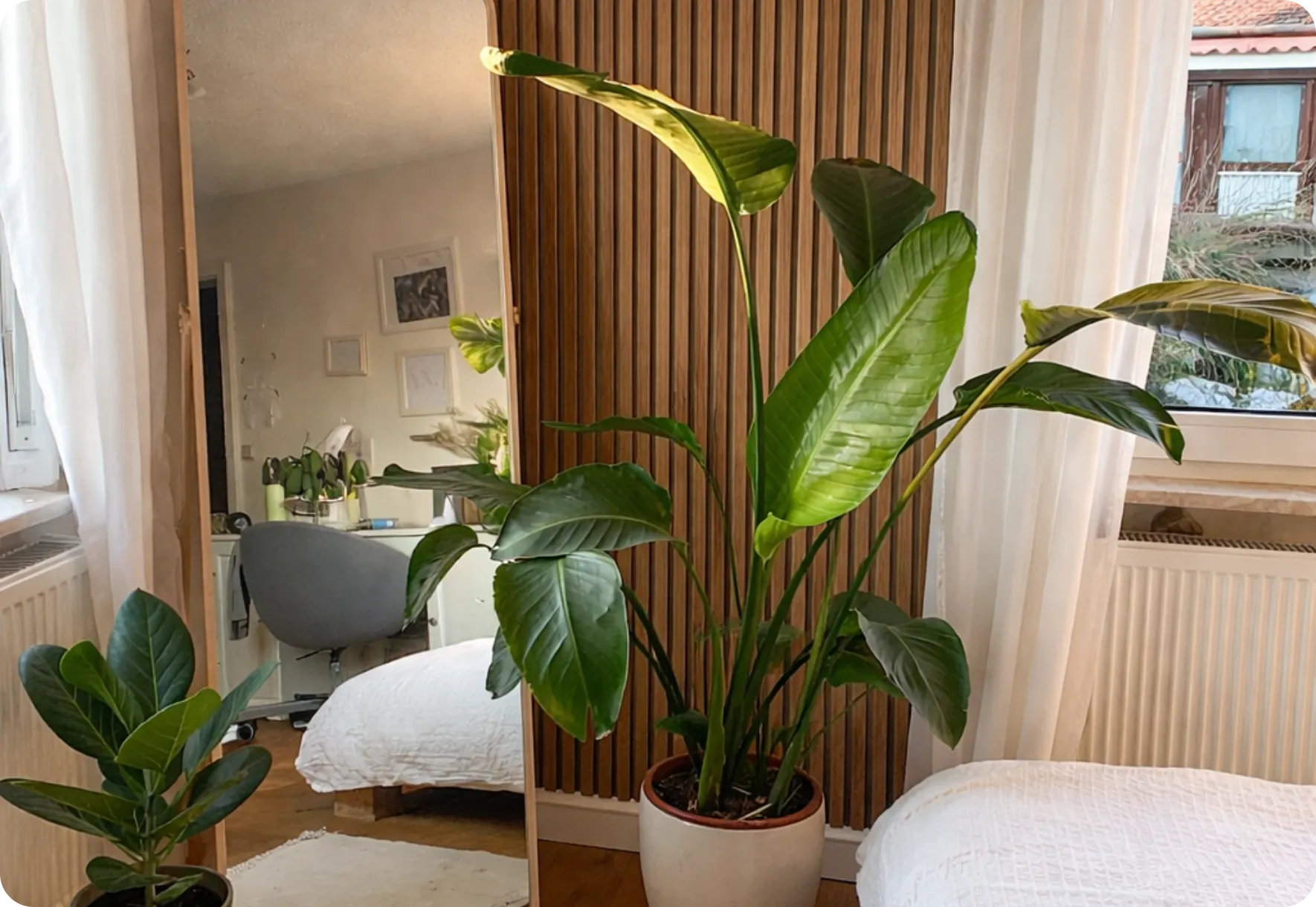
| Plants (large) | ~0.1 | €20–60 | 0 | ⭐ (minimal, mainly diffusion) |
Acoustic Target Values for Different Rooms
| Room type | Optimal RT60 (generally recommended) | What it means |
|---|---|---|
| Living room | 0.5–0.8 s | Clear but not "dead" — music and conversations can sound natural |
| Bedroom | 0.4–0.6 s | Quiet, dampened — can be ideal for sleep |
| Home office | 0.3–0.5 s | Dry — can be optimal for video calls and focus |
| Kitchen | 0.5–0.7 s | Slightly livelier (cooking sounds) |
| Home cinema | 0.3–0.5 s | Controlled — defined bass, clear dialogue |
| Hallway | 0.4–0.6 s | No tunnel echo, footsteps not too loud |
| Recording studio | 0.2–0.4 s | Maximum dryness — every detail audible |
Most untreated living spaces tend to fall between 1.2–2.0 seconds — often well above the optimum. Even a single accent wall plus a rug can bring many rooms closer to the target range.
Frequently Asked Questions
Three measures in order of typical effectiveness: 1) Acoustic panels on one wall. 2) Rug in the living area. 3) Heavy curtains on windows. Together, these three measures can reduce reverberation meaningfully in most living spaces.
Because furniture often absorbs less than most people expect. A wooden table, a leather sofa, and a sideboard are hard surfaces that reflect sound almost as much as walls. Only upholstered furniture with fabric covers provides noticeable absorption. In a typical living room, the majority of surfaces can remain hard and reflective even with furniture.
A common rule of thumb: 15–25% of the total room surface area (walls + ceiling + floor) covered with absorbing materials. That can sound like a lot, but a rug, curtains, an upholstered sofa, and an accent wall often add up quickly to meet that target.
For most living spaces: typically no. The 5-step plan (clap test → panels → rug → optionally curtains/ceiling) is often enough for a noticeable improvement. An acoustician is generally recommended for: professional studios, concert halls, rooms with unusual geometry (e.g. vaulted ceilings, curved walls), or if problems persist despite treatment.
It can make a significant difference. Your laptop microphone picks up reverberation in the room — a few acoustic panels behind your desk can help reduce the "bathroom echo" in Zoom, Teams, and Google Meet. Colleagues often notice the difference. The home office camera wall is often one of the most efficient single measures for better calls.
Conclusion: Good Acoustics Is Not a Luxury — It's a Basic Need
We invest in good furniture, lighting, and colors — but acoustics are often overlooked, even though they can influence well-being just as much. The good news: the most effective measures are typically simple, affordable, and can look great. An accent wall made of acoustic panels can improve acoustics, design, and living quality at the same time — often in one afternoon.
Reverberation times and NRC values shown are general industry references. Actual acoustic performance in your room depends on room size, geometry, existing surfaces, panel placement and coverage area. Results may vary between installations. RT60 target values are based on generally accepted acoustic guidelines and may need to be adapted to individual preferences. Prices mentioned correspond to the current prices at the time of publication and are subject to change.



Leave a comment
This site is protected by hCaptcha and the hCaptcha Privacy Policy and Terms of Service apply.