



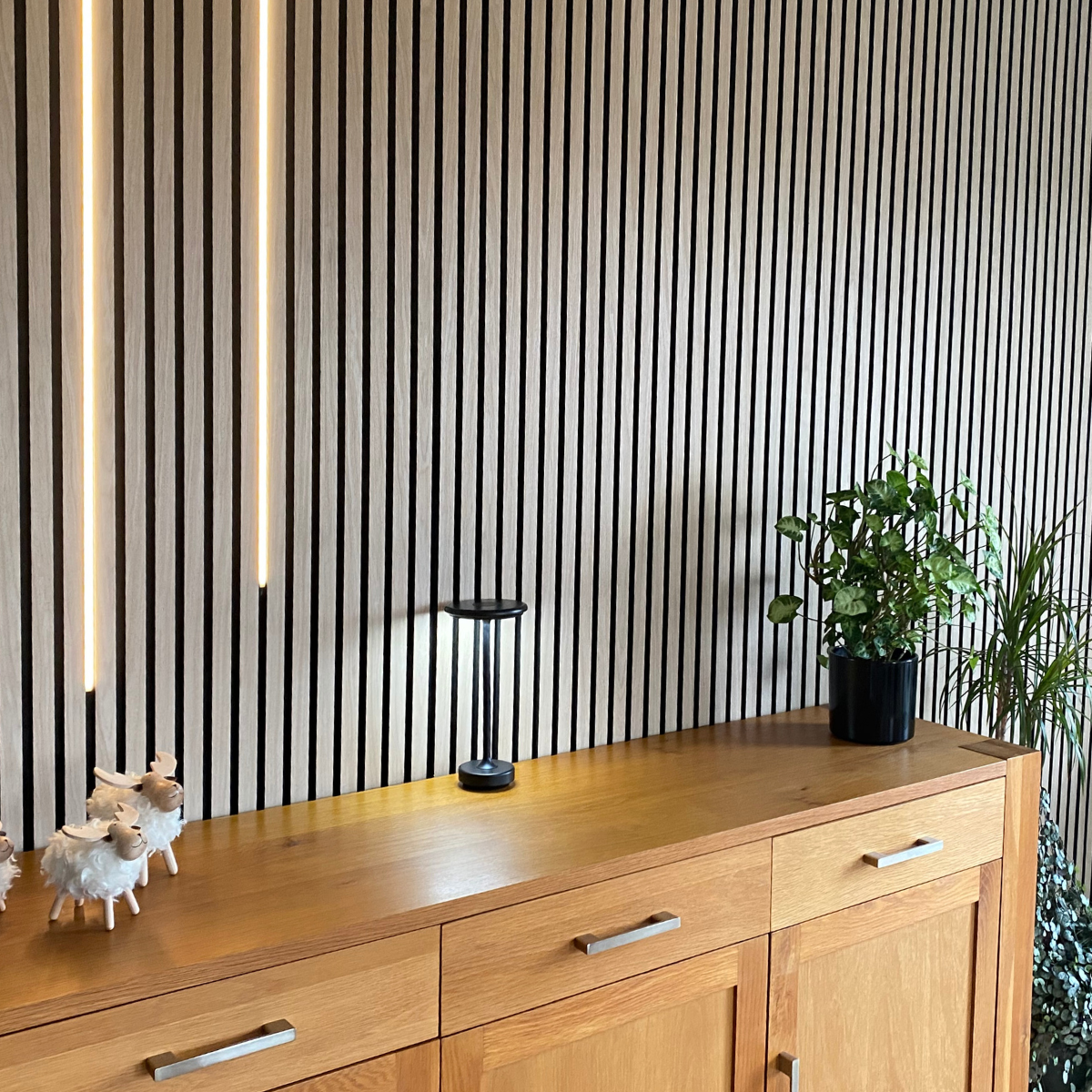
Optimize Reverberation with Acoustic Panels: A Guide to a Better Sound Environment
Many people have experienced walking into a room where the sound echoes and conversations are hard to follow. This is often due to the phenomenon of reverberation. In this article, we explain what reverberation is, why it can be a problem in homes and other spaces, and how acoustic panels can be used to improve acoustics.
What is Reverberation?
Reverberation refers to the prolonged reflection of sound within a room. Sound travels in waves, and if these waves carry a lot of energy, it takes longer for them to fade away. In other words, the sound lingers in the space even after the source has stopped.
Reverberation mainly occurs because sound waves bounce off the surfaces in a room. Hard materials such as bare walls, ceilings, and floors (e.g., concrete, plaster, tiles, or wooden floors) reflect sound strongly. In a room with many large, smooth, and open surfaces, the sound continues to bounce between walls, ceilings, and floors. The fewer soft or sound-absorbing materials present, the longer the reverberation lasts.
Why is Reverberation a Problem?
Poor acoustics with excessive reverberation affect not only our hearing but also our overall well-being.
-
Stress and fatigue: Constant noise and reverberation can raise stress levels and make us unnecessarily tired over time.
-
Difficulty concentrating: In a noisy, echoing environment, it’s hard to stay focused.
-
Headaches and discomfort: Many people experience physical strain such as headaches or tension after spending long periods in spaces with poor acoustics.
How Can Reverberation Be Reduced?
The most effective way to reduce reverberation is to introduce sound-absorbing materials into the room. The goal is to dampen reflected sound waves before they spread and create echo. This can be achieved with soft surfaces or acoustic products. A popular and efficient solution is to install acoustic panels on walls or ceilings.
What Are Acoustic Panels and How Do They Work?
Acoustic panels are decorative panels designed to absorb sound. An acoustic panel typically consists of a porous, sound-absorbing core - such as felt - combined with a perforated or slatted surface, often made of narrow wooden slats on the front.
When a sound wave hits an acoustic panel, it penetrates the porous material inside. Here, the sound energy is converted into a small amount of heat through friction in the material, which makes the sound fade more quickly. At the same time, the panel’s slats or patterns break up the sound waves’ direction, preventing direct reflection back into the room. The result is a significant reduction in reverberation time, making the sound clearer and more comfortable.
Installing and Positioning Acoustic Panels
Acoustic panels can be relatively easy to mount on both walls and ceilings, depending on where sound absorption is needed.
Coverage is also important: a single panel can make a local difference, but to truly transform a room’s acoustics, a certain percentage of surfaces must be covered with absorbing material. A good rule of thumb is that about 20-25% of the floor area should be matched with sound-absorbing surfaces for a noticeable improvement. This can be achieved by evenly distributing multiple acoustic panels throughout the room.
Another factor is the mounting method: panels can be installed directly on the wall, or with a small air gap and insulation behind them. Direct mounting provides some sound absorption, but placing the panels over a layer of mineral wool (with a few centimeters of spacing via battens) significantly enhances absorption. In fact, in this setup, acoustic panels can achieve the highest absorption class - Class A



Leave a comment
This site is protected by hCaptcha and the hCaptcha Privacy Policy and Terms of Service apply.