



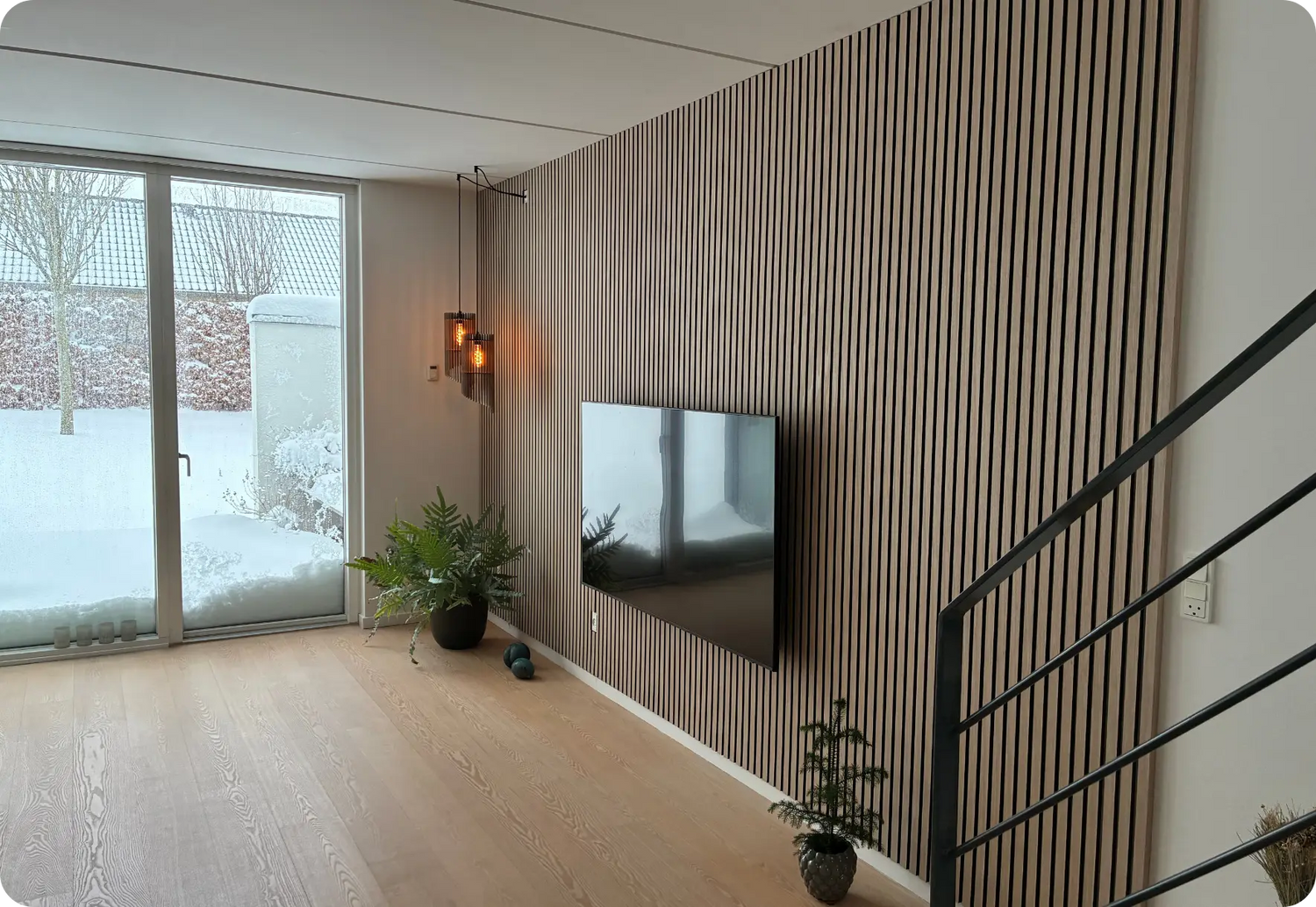
How to transform your living room into a space with great sound and modern design
Why Acoustic Panels in the Living Room?
The living room is the most-used room in the home — and often the one where echo is most noticeable. Hard floors, large windows, and open floor plans create reverberation that makes conversations harder to follow and movie nights less enjoyable. Acoustic panels solve this elegantly.
Better room acoustics: Panels with a felt backing absorb sound reflections from the wall they're mounted on. In a 20 m² living room, a single accent wall (6–10 panels) can reduce reverberation noticeably — conversations become clearer, movie dialogue crisper, and the room simply feels calmer.
Instant design impact: Vertical wood veneer slats transform a plain wall into an architectural focal point. The trend toward wood wall treatments is one of the strongest interior trends of recent years — and with acoustic panels, you get aesthetics and function in one installation.
Simple installation: Unlike wallpaper or plaster, panels can be mounted in 2–3 hours — including by renters using only mounting adhesive. No professional needed, no special skills required.

5 Design Ideas for Your Living Room
💡 1. Accent wall behind the sofa
The classic: a full-height panel wall behind the sofa with vertical slats. For a 3.5 m wide wall: approximately 7 Standard panels (52 cm each). A lighter tone works beautifully in bright, Scandinavian-style rooms, while a warmer tone (Smoked or Light Brown) creates a cozier, more intimate atmosphere.
Panels: 6–7 · Adhesive: 4–5 cartridges · Time: ~2 hours
💡 2. TV wall with slat panels
Acoustic panels as a TV wall are a design feature and a sound improvement in one. Mount panels behind the TV and let them run floor to ceiling (242 cm). A darker tone (Black or Smoked) frames the TV elegantly and lets the screen blend in when turned off. Full TV wall guide: TV wall article.
Panels: 5–6 · Effect: Better audio + hidden cables + design statement
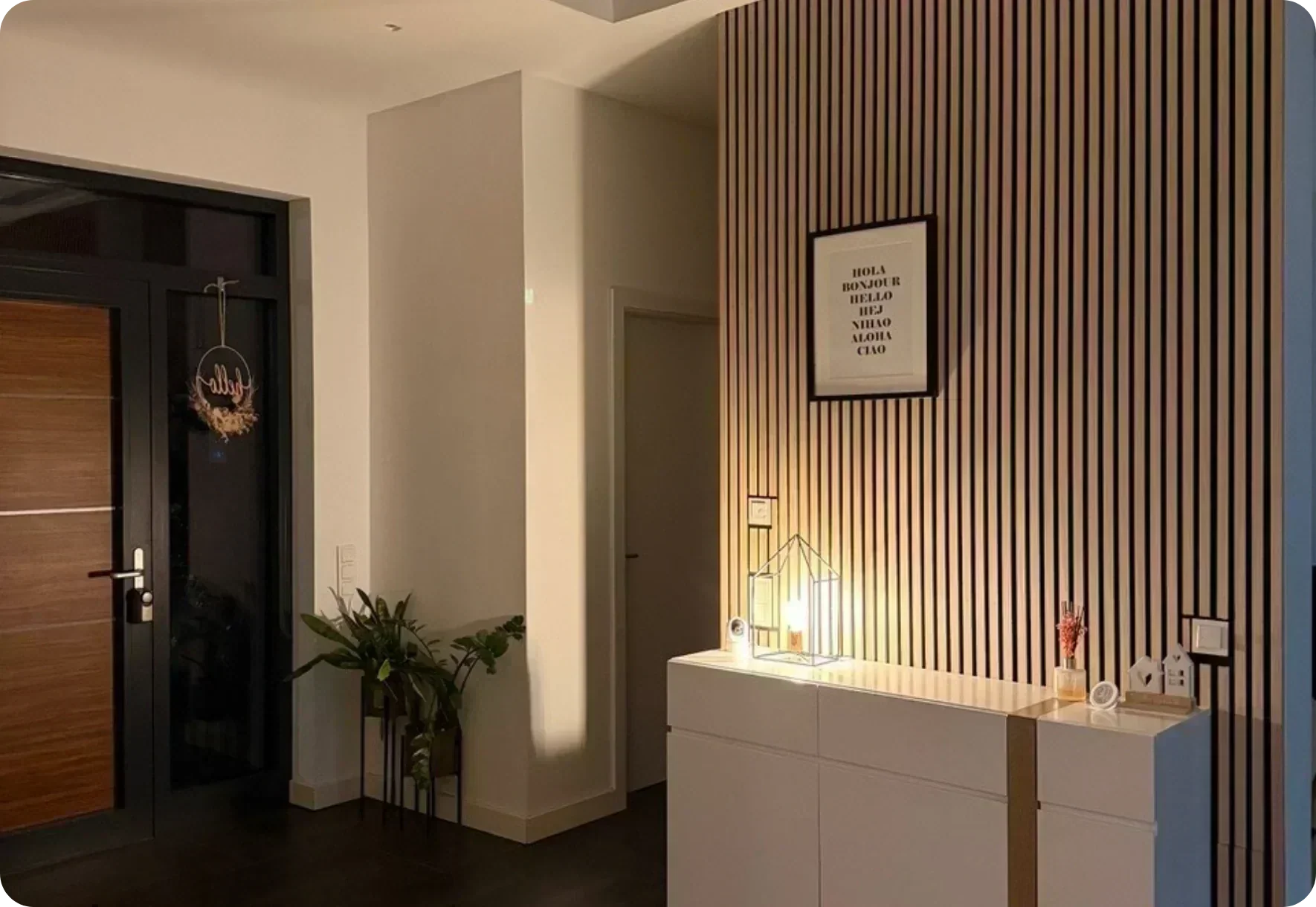
💡 3. Partial coverage as a design element
You don't have to cover the entire wall. A section of 4–5 panels — about 2 m wide, floor to ceiling — works like an oversized piece of art. Particularly striking as a contrast: darker panels on a white wall, or a warm tone (Smoked) against a light grey wall.
Panels: 4–5 · Adhesive: 3–4 cartridges · Effect: Gallery-scale design feature
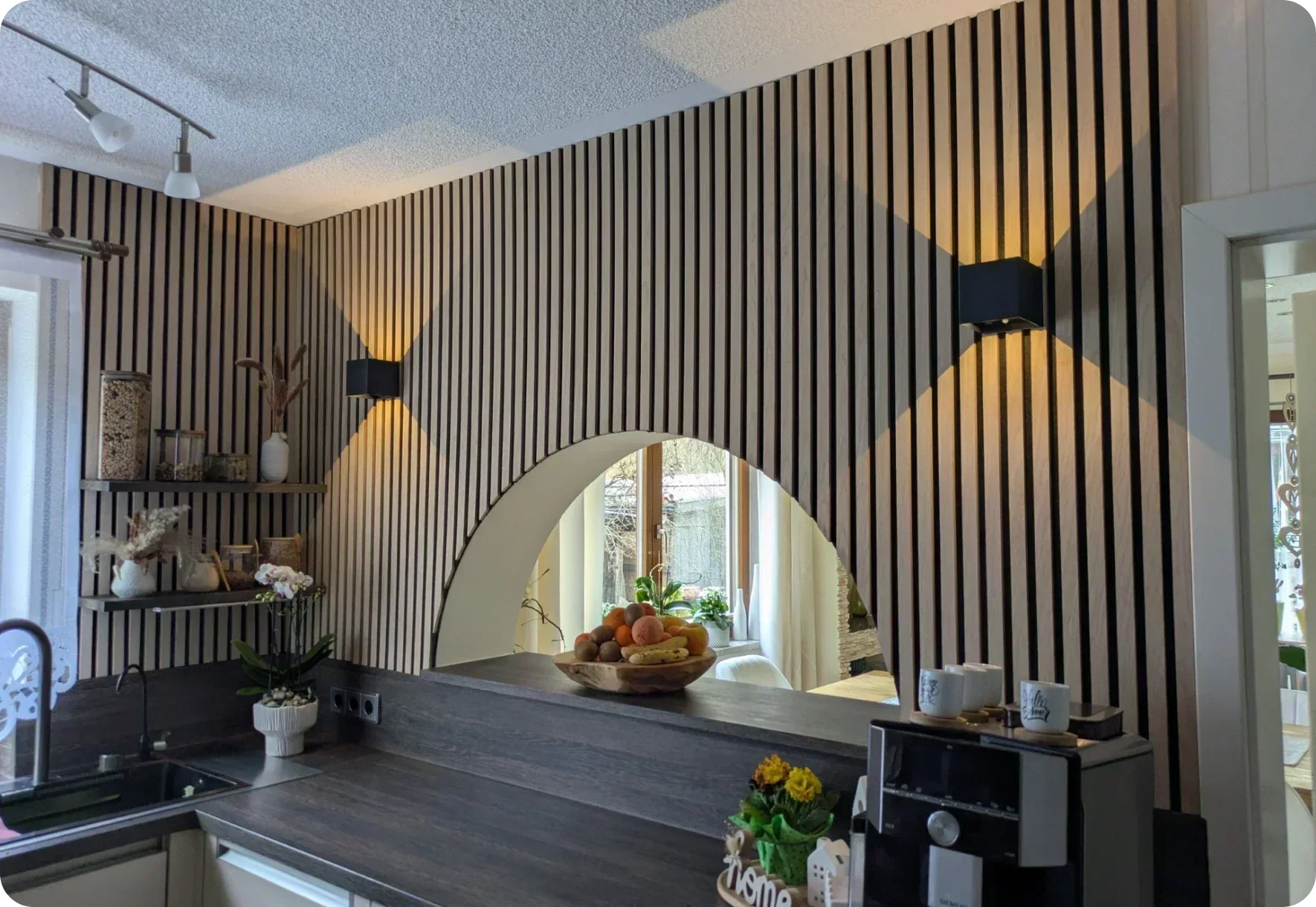
💡 4. Open kitchen–living room divider
In open floor plans, panels can create visual zoning between the cooking and living areas while reducing sound transfer between the two zones. The panels mark the boundary without building a wall — the space stays open while the acoustics improve. Combine with a freestanding room divider for maximum effect.
Effect: Acoustic zoning + visual separation + open layout maintained
💡 5. Horizontal mounting for low ceilings
In older apartments with 2.40 m ceiling height, horizontal mounting can work surprisingly well: the horizontal slat lines stretch the room visually and make the ceiling feel higher. Standard panels (242 × 52 cm) can be easily cut to size for horizontal row layouts.
Effect: Room feels wider + contemporary look + same acoustic benefit
 Which Color for Your Living Room?
The color choice depends on your existing interior. As a rule of thumb: bright rooms can handle darker panels as contrast, while darker rooms benefit from lighter tones for more openness.
| Color | Style fit | Best for |
|---|---|---|
| Light | Scandinavian, minimalist, modern | Bright rooms with generous daylight. The all-rounder that works with most interiors. |
| Smoked | Warm, earthy, natural | Rooms with leather furniture, natural textiles, and earth tones. Creates a cozy, inviting atmosphere. |
| Light Brown | Versatile, neutral, balanced | The middle ground — warm enough for comfort, light enough for medium-sized rooms. |
| Black | Bold, modern, architectural | TV walls, large bright rooms, and spaces where the panels should make a dramatic statement. |
How Many Panels for Your Living Room?
| Wall width | Standard panels (52 cm) | Premium panels (60.5 cm) | Adhesive cartridges |
|---|---|---|---|
| 2 m (partial accent) | 4 panels | 3–4 panels | 3 cartridges |
| 2.5 m (TV wall) | 5 panels | 4 panels | 4 cartridges |
| 3 m (sofa wall) | 6 panels | 5 panels | 4 cartridges |
| 3.5 m (wide accent) | 7 panels | 6 panels | 5 cartridges |
| 4 m (full wall) | 8 panels | 7 panels | 6 cartridges |
For exact calculations including trimming: size calculator.

Mounting Tips for the Living Room
For most living room walls: mounting adhesive (1 cartridge per ~1.5 panels) combined with panel screws (15 per panel) for maximum stability. On plasterboard walls, adhesive alone is often sufficient — ideal for renters.
Installation time per panel: approximately 15 minutes. A full 8-panel accent wall takes under 2 hours. Full step-by-step: installation guide. Renters: no-drill mounting.
The Acoustic Difference
Living rooms typically have the most hard, reflective surfaces of any room: hardwood or tile floors, large windows, glass tables, flat-screen TVs. Sound bounces between these surfaces and creates a layer of ambient echo that makes everything louder and less clear than it should be.
What panels improve:
• Conversation clarity (people understand each other across the room)
• Movie and music sound (dialogue and detail become more distinct)
• Overall room comfort (the space feels calmer, less fatiguing during long evenings)
• Open-plan separation (kitchen noise stays more contained)
Where to place for maximum effect:
• Behind the sofa: Absorbs reflections from the primary seating area
• Behind the TV: Absorbs audio reflections from speakers and soundbars
• Opposite large windows: Breaks the reflection path between glass and wall
• Between kitchen and living zones: Creates acoustic separation in open plans
For more on how acoustic treatment works: how effective are acoustic panels?
Frequently Asked Questions
For a single accent wall in a 20 m² living room: typically 6–10 panels, depending on wall width. Divide the wall width in centimeters by the panel width (52 cm Standard, 60.5 cm Premium) for the exact number. See the wall-width table above for quick reference.
Yes — noticeably. The felt backing absorbs a significant portion of sound reflections that cause echo. The improvement is particularly clear in rooms with hard floors (tiles, hardwood, laminate) or large glass surfaces. Conversations become easier to follow, and movie audio sounds fuller and more defined.
Yes. Mounting adhesive holds panels securely on plasterboard and wallpapered walls — no drilling, no holes. When you move, the panels come off with a spatula and minimal traces can be sanded away. Full guide: no-drill mounting.
Panels with a real wood veneer surface provide the most natural look and warmth — they look and feel like real wood because they are. The felt backing provides the acoustic function. For the difference between materials: veneer vs plastic comparison.
Depends on your style: Light for Scandinavian and minimalist rooms, Smoked for warm and earthy interiors, Black for bold TV walls and large bright spaces. When in doubt, Smoked or Light Brown tend to work in the widest range of living room settings. Test with a free sample box before committing.
Yes — the TV bracket drills through the panels into the structural wall behind. The panels provide the backdrop; the wall behind provides the structural support. Cables route behind the slats. Full TV wall guide: TV wall article.
Conclusion: Your Living Room Deserves an Accent Wall
Acoustic panels in the living room are one of those rare upgrades that look great and make the room sound better — at the same time. Whether behind the sofa, framing the TV, or marking the boundary with an open kitchen, the right accent wall transforms the room you spend the most time in. One afternoon, one wall, and the living room sounds and looks like a different space.
Still deciding?
Order a free sample box and experience the colors and quality in your own living room — in your light, on your wall.
Free sample box → View all panels →Acoustic improvements depend on room size, shape, surface materials, and panel quantity. Results described are based on typical residential living room configurations. Visual effects of color choices vary with lighting conditions and surrounding interior elements.


Leave a comment
This site is protected by hCaptcha and the hCaptcha Privacy Policy and Terms of Service apply.