



How acoustic panels became a staple of modern interiors - and how to use them in every room of the home.
Why acoustic panels became a design staple
Decorating with acoustic panels is now as much about style as about function. What started as a technical solution - used in studios and conference rooms to dampen sound - has become an essential part of modern interiors. The shift makes sense: most homes share two problems that panels solve simultaneously. Hard floors, large windows, and minimal soft furnishings create reverberation. Large empty walls dominate the visual field. A single wall of acoustic panels takes both problems off the table in one move.
The aesthetic added something the technical use never had: the visual rhythm of vertical slats, the warmth of real wood, and the calm of natural materials. A panel wall in Smoked or Light Brown reads instantly as intentional design - not absorptive material that happens to be visible.
Room-by-room styling guide
1. Living room - the TV feature wall
Mount panels behind the TV from floor to ceiling, in a width slightly wider than the screen. The TV stops looking like a hole in the wall and starts looking like part of the room. Add an LED strip behind the top edge for a hotel-lobby glow at night. For a 65-inch TV: 3 Premium panels (60.5 cm wide each) is a common starting point. Smoked is the most popular tone for TV walls because it doesn't compete with the screen for attention.
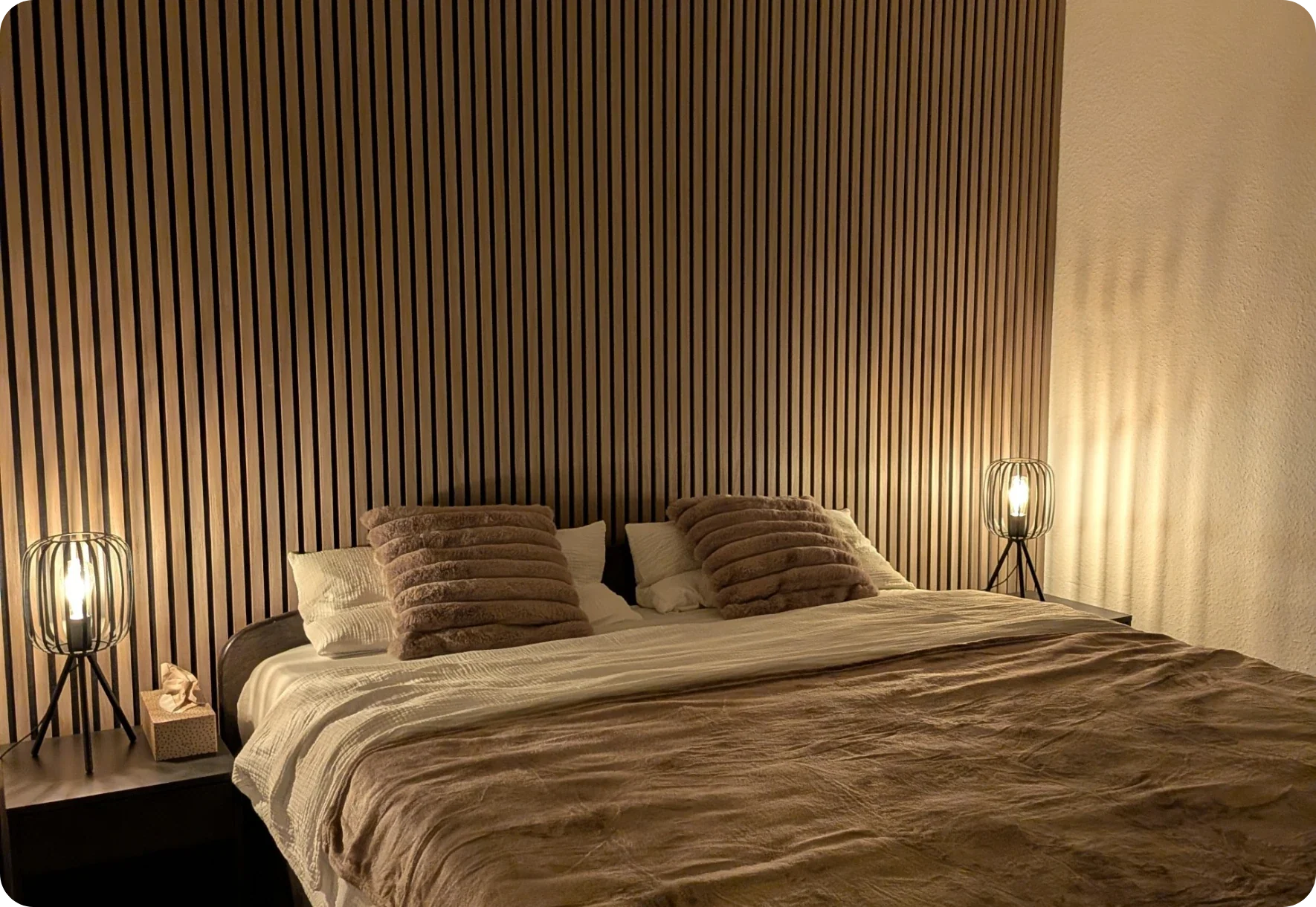
2. Bedroom - the headboard wall
Panels from mattress height to the ceiling, behind the bed. Replaces a traditional headboard entirely and adds quiet to the room. For a 160 cm bed: 3 Premium panels. For a 200 cm king: 4 Premium panels. Light Brown or Smoked are the most popular bedroom tones. See the bedroom guide for layout options.
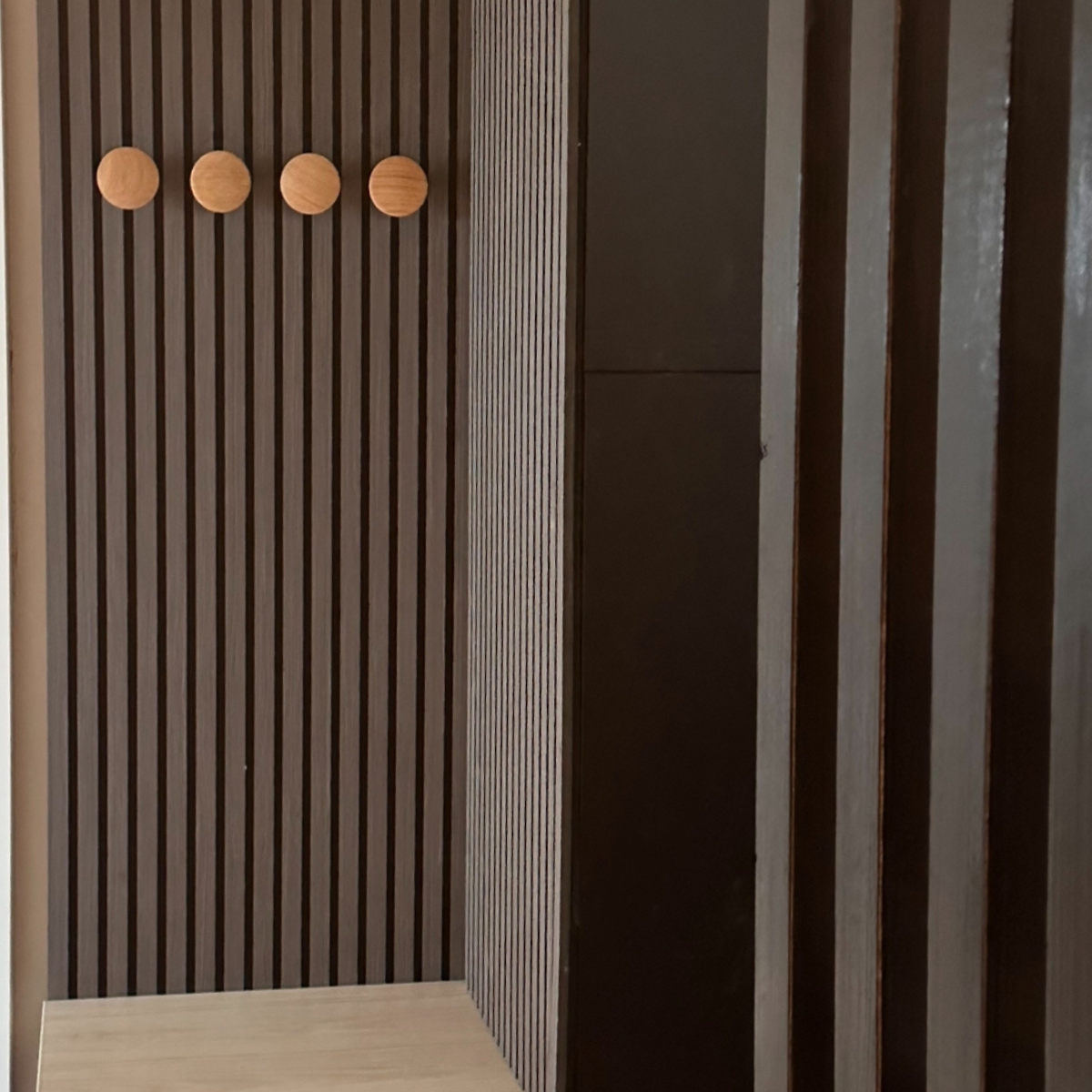
3. Hallway - the first impression
The hallway is the smallest room with the biggest impact on how guests perceive the home. A short run of panels - combined with matching wall hooks or a floating shelf - turns a corridor into an entrance. Light tones make narrow hallways feel wider; Smoked adds depth in entrances with strong natural light.
4. Kitchen - behind the island or as an accent wall
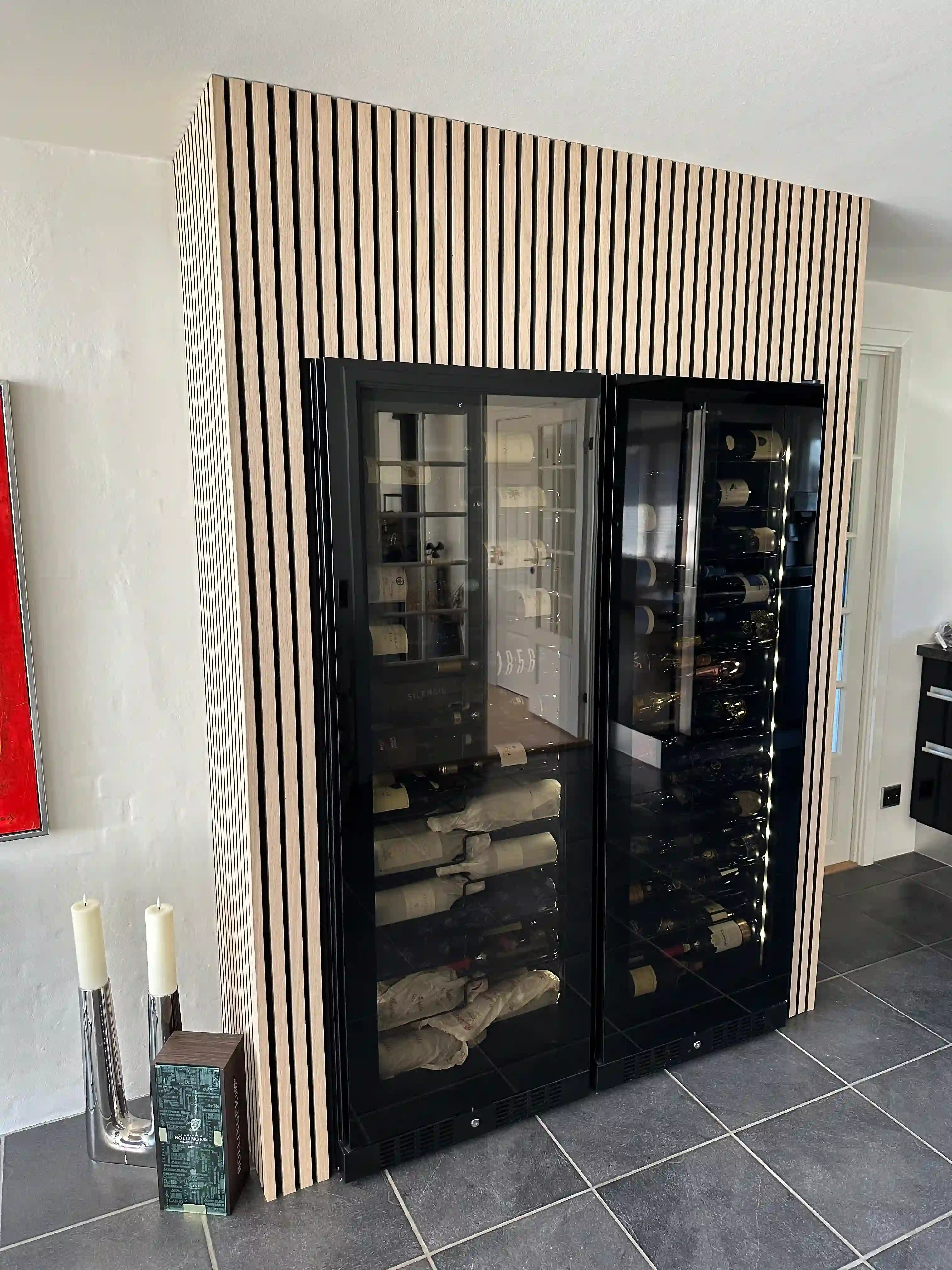
Acoustic panels work well in kitchens away from direct splash zones - for example behind a kitchen island, on the wall opposite the cooking area, or along the back of an open-plan dining nook. Avoid placing them directly above the stove or sink. Wood veneer wipes clean with a slightly damp cloth.
5. Ceiling - the vertical surprise
Ceiling panels add architectural height and visual interest in rooms with otherwise flat ceilings. Most common in living rooms and bedrooms. Ceiling installs typically use 25 screws per panel (vs 15 for walls) due to gravity. Best for ceilings up to 280 cm - taller ceilings risk the panels feeling too distant to read clearly. Installation guide.
6. Stairway - the continuous wall
Panels running alongside the staircase create a continuous vertical line that emphasises the architecture of the stairs. Works particularly well in open-tread or floating staircases. The slat rhythm guides the eye up or down naturally. For curved stairs, panels can be cut into shorter sections.
Choosing the right tone
The Silentwood range has four tones, each creating a different atmosphere. The same room can read warm, cool, dramatic, or minimal depending on the tone chosen - so the decision is as much about the mood you want as about matching existing furniture.
| Tone | Character | Best for |
|---|---|---|
| Light | Bright, airy, Scandinavian | Small rooms, north-facing spaces, minimalist interiors |
| Light Brown | Warm, golden, timeless | Living rooms with wood floors, linen textures, earth-tone palettes |
| Smoked | Deep, warm, hotel-like | Most rooms - the most versatile choice across styles |
| Black | Dramatic, modern, architectural | Large rooms with strong natural light, bold design language, offices |
For a detailed tone-by-tone breakdown with side-by-side comparisons: wood veneer tones guide.
Material and construction
Each Silentwood panel is built around an MDF core with real wood veneer bonded to the visible face. The back is finished with a felt layer that handles the acoustic absorption while providing a stable mounting surface. Finishes are water-based.
The combination of real wood veneer (not printed film) and a stable core means the panels age the way real wood does - gaining character rather than degrading. The veneer face wipes clean with a soft cloth and a small amount of water.
Frequently asked questions
Living rooms and bedrooms see the highest impact - large surfaces, plenty of echo to dampen, and clear design payoff. Hallways and stairways are popular for the visual statement. Kitchens work when panels are kept away from direct splash zones. Bathrooms and saunas should be avoided due to humidity.
Yes, with placement awareness. Best installed away from direct cooking splash and steam - for example on the wall opposite the stove, behind a kitchen island, or in an adjoining dining area. The wood veneer surface tolerates occasional wiping but should not be installed directly above a stove or sink.
Yes. Ceiling installation adds architectural height and acoustic absorption from above - particularly effective in living rooms and bedrooms with otherwise flat ceilings. Use 25 screws per panel (vs 15 for walls) to account for gravity. Best for ceiling heights up to 280 cm.
Match the warmth, not the exact colour. Wood floors and warm linen furniture pair naturally with Light Brown or Smoked. Cool grey or white interiors with metal accents pair well with Light or Black. The slat rhythm becomes part of the design - so the tone should harmonise with the room's overall warmth, not perfectly match a specific piece of furniture.
A real wood veneer surface on an MDF core, with water-based finishes and a felt backing that absorbs sound. More: material guide.
Light for bright, minimalist rooms. Light Brown for warm, natural interiors with wood and linen. Smoked for hotel-style atmosphere - works in most rooms. Black for dramatic, modern spaces with strong daylight. When in doubt, Smoked is the safest choice because it adapts to most styles. A free sample box is the fastest way to decide.
Style, sound, and substance in one decision
The strength of acoustic panels as a design element is that they don't ask you to choose between form and function. The same wall that anchors the room visually also softens the acoustic, and the same material that performs technically also reads as deliberate, calm, premium. That alignment between what you see and what you hear is rare in interior design - most decisions either look good or work well, but rarely both with equal weight.
Whichever room you start with, the principle stays the same: pick the tone that matches the atmosphere you want, plan the layout against the room's natural focal point, and trust that the slats will do the rest of the work.
The individual effect of acoustic panels can vary depending on room size, materials, and furnishings. Acoustic panels reduce reverberation and echo - they do not provide complete sound isolation against external noise. Color perception varies depending on lighting conditions, monitor calibration, and personal preference. Material samples are recommended for final color decisions.


Leave a comment
This site is protected by hCaptcha and the hCaptcha Privacy Policy and Terms of Service apply.