



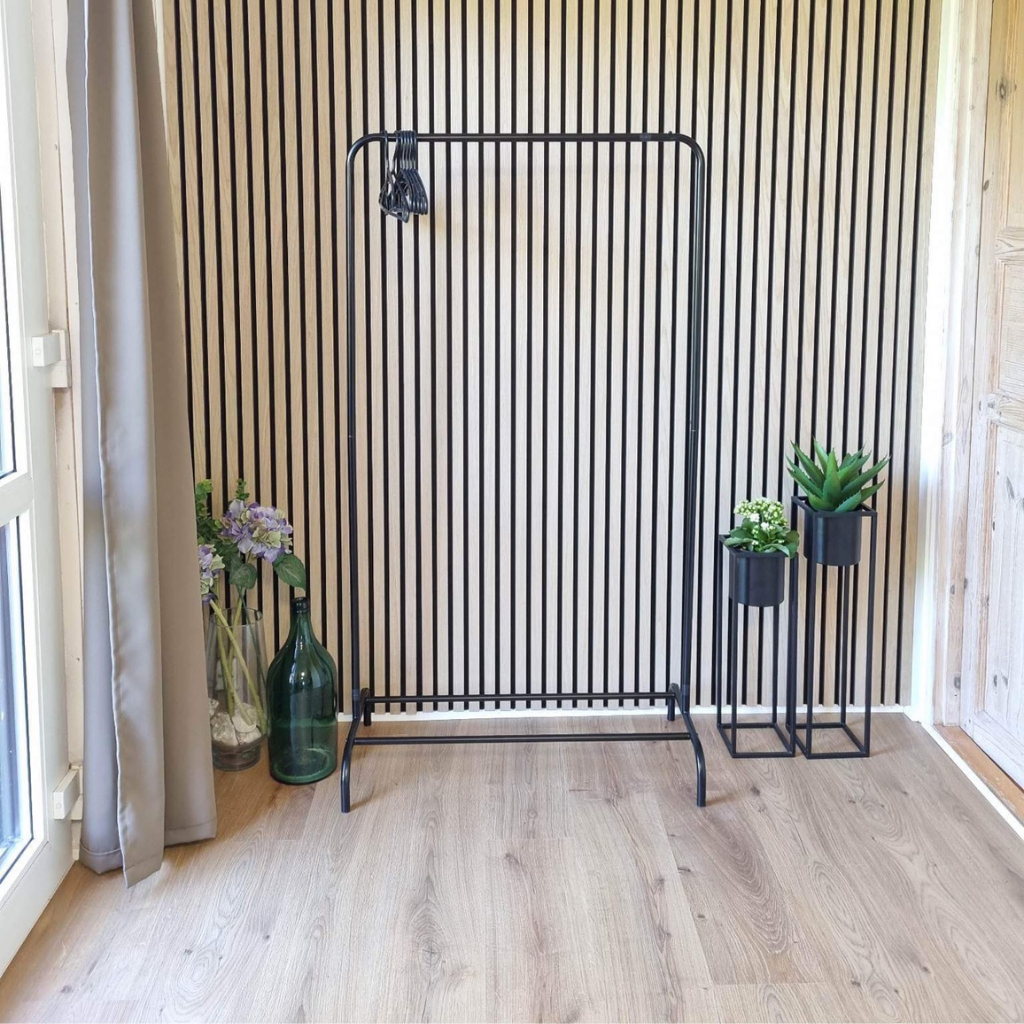
Why the bedroom is one of the most rewarding rooms for acoustic treatment - and how to do it without a headboard.
Why the bedroom benefits more than most rooms
Bedrooms tend to amplify small sounds. Hard floors, large windows, sparse soft furniture and minimal wall decoration mean that every rustle, turn, and notification echoes more than it should. Acoustic panels behind the bed reduce that reverberation - the room feels quieter even when external noise hasn't changed.
There's also a design problem most bedrooms share: the wall behind the bed is the largest visible surface in the room, and it's almost always empty. A headboard solves part of it. An acoustic panel wall solves all of it - visual anchor, sound absorption, and warmth in a single 30-minute install.
The 6 most common bedroom layouts
1. The headboard wall
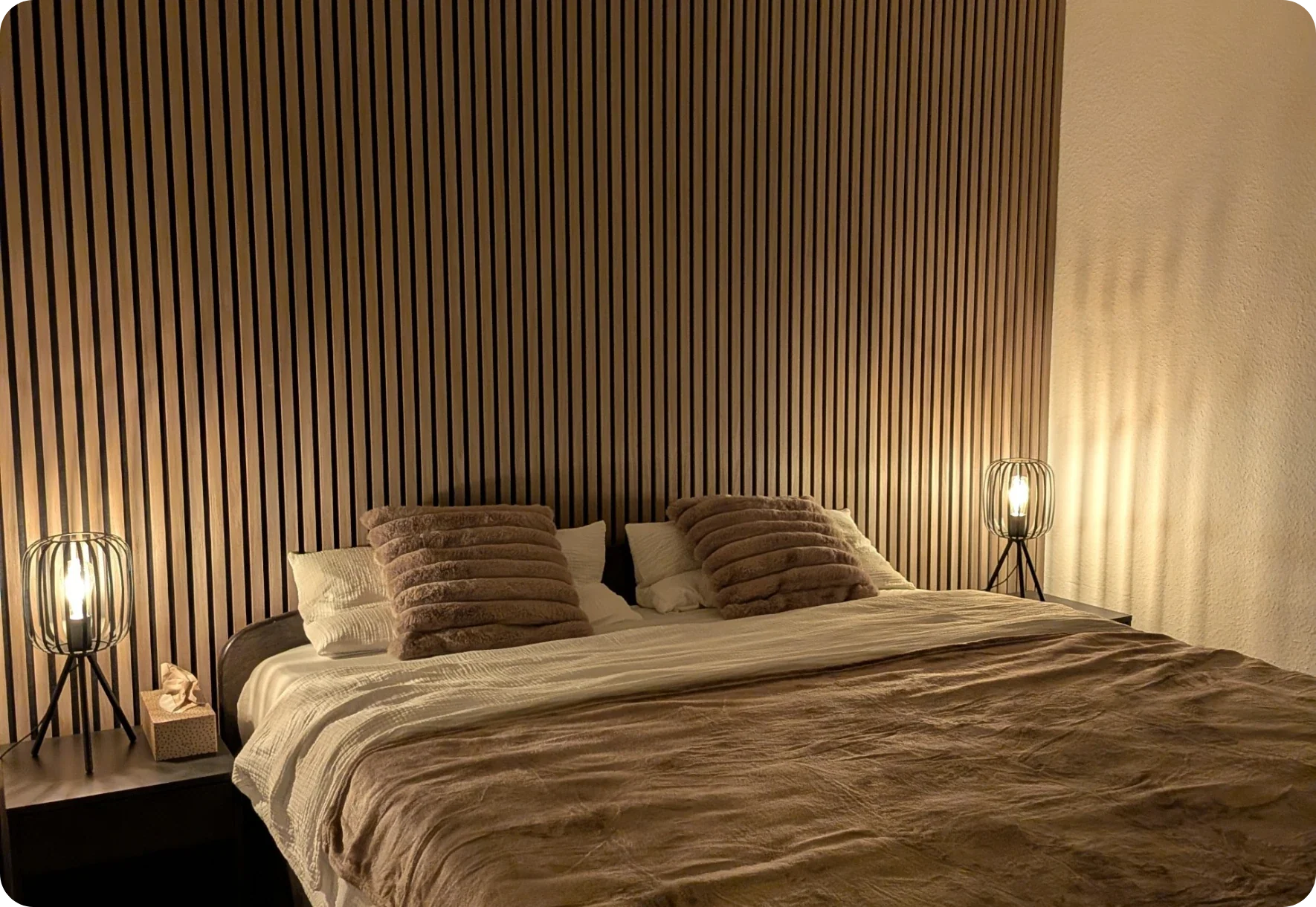
The most popular bedroom setup. Panels run from mattress height (or the floor) to the ceiling, behind the bed. Replaces a traditional headboard entirely. For a 160 cm bed: 3 Premium panels. For a 200 cm king: 4 Premium panels. Smoked or Light Brown tends to work best.
2. Full accent wall
Panels cover the entire wall behind the bed, edge to edge - not just the bed width. Adds more visual weight and slightly more absorption. Best in rooms wider than 3 m. Pair with a single piece of art or floating shelves on the opposite wall to balance the space.
3. Reading nook accent
Panels in an L-shape around a corner reading chair, or along the wall next to a wardrobe. Smaller commitment than a full headboard wall, but adds character and softens the surrounding acoustics. Often combined with a wall lamp or floor reading light.
4. LED bedside backlight
LED strip behind the panels (top edge or sides) creates an indirect glow that replaces bedside lamps. Boutique-hotel atmosphere with minimal effort. The 21 mm panel depth easily hides standard LED strips and the power cable.
5. Renter-friendly install
Adhesive-only mounting - no drill holes, no damage to the wall. Removable when moving out with a heat gun or careful prying. Best for tenants who want to upgrade their bedroom without losing their deposit. Works on drywall and matte-painted walls.
6. Shared-wall noise dampening
Panels on a neighbor-shared wall help dampen ambient noise from the other side. Note: acoustic panels reduce echo and soften sound - they don't block external noise like a soundproof wall would. The benefit is a warmer, less reflective auditory environment, not silence.
Choosing the right tone for your bedroom
The four Silentwood tones each create a different mood in a bedroom. Two of them - Smoked and Light Brown - account for the majority of bedroom installs because they balance warmth with versatility.
| Tone | Atmosphere | Best for |
|---|---|---|
| Light | Bright, fresh, open | Small bedrooms, north-facing rooms with limited natural light |
| Light Brown | Warm, golden, natural | Bedrooms with wood floors, linen bedding, earth-tone palettes |
| Smoked | Deep, warm, hotel-like | Most bedrooms - the most versatile choice across styles |
| Black | Dramatic, modern, architectural | Large bedrooms with strong natural light and bold design language |
For a complete tone-by-tone breakdown across all rooms: wood veneer tones guide.
Installation considerations
How many panels do you need?
A Premium panel measures 242 × 60.5 cm. For a standard 160 cm bed, you'll typically need 3 Premium panels for the headboard area, or 3-4 Standard panels (52 cm wide each). For a 200 cm king bed, plan for 4 Premium or 4-5 Standard. If you want the panel wall to extend beyond the bed width - for a full accent wall - measure the full wall and add panels accordingly.
Renter or owner?
Renters can use adhesive-only mounting. No drilling, no holes, fully removable when moving out. Owners often combine adhesive with screws (15 per panel, hidden in the slat grooves) for maximum security - particularly if the room sees regular vibration from upstairs neighbors or street traffic.
Install time
Around 30 minutes for a typical bedroom accent wall. Measure, mark, apply adhesive in continuous beads on the back of each panel, press for 30 seconds, optionally add screws. Skip the cutting if the panels fit your wall height (242 cm is standard ceiling). For taller walls, see the installation guide.
Frequently asked questions
For a 200 cm king bed, plan for 4 Premium panels (60.5 cm wide each) for the headboard area. If you want the panels to extend beyond the bed for a full accent wall, measure the full wall and add 2 panels on each side as a starting point. Use the calculator for exact quantities including adhesive and screws.
Yes. Silentwood panels combine a real wood veneer surface with water-based finishes and a felt backing that absorbs sound. They don't collect dust the way fabric does and are easy to wipe clean. More: material guide.
Yes. Use adhesive-only mounting - fully removable when moving out using a heat gun or careful prying. Most adhesives leave little to no residue when removed properly. This is one of the most common bedroom setups for tenants who want to upgrade without losing their deposit.
They reduce echo and soften ambient sound - they don't block external noise like a soundproof wall would. The benefit is a calmer, less reflective auditory environment: less reverberation, softer high-frequency sounds, and a warmer overall feeling. Many users describe the room as "feeling quieter" even when external noise hasn't changed.
Light or Light Brown. Lighter tones reflect more natural light and tend to make small rooms feel more open. Avoid Black in small bedrooms with limited light - it can make the space feel closed in. Smoked is a safe middle ground that works in most sizes, though it shows its best in rooms with reasonable daylight.
Yes - this is one of the most popular uses. Mount the panels from mattress height (or the floor) up to the ceiling, behind the bed. The panels become both the visual headboard and a sound-absorbing surface. No separate headboard furniture needed, and no risk of a fabric headboard collecting dust over the years.
The bedroom is where panels pay off fastest
You spend roughly a third of your life in your bedroom. Of all the rooms in a home, this is the one where small improvements in atmosphere - a warmer wall, a softer acoustic, a more intentional design - compound the most over time. Acoustic panels solve three problems at once: the empty headboard wall, the echo from hard floors, and the lack of natural warmth that paint and wallpaper alone can't deliver.
The hardest part is choosing the tone. The easiest fix for that is to hold the real material against your own wall, in your own light. Free sample box, 30 seconds to order, no commitment.
The individual effect of acoustic panels can vary depending on room size, materials, and furnishings. Acoustic panels reduce reverberation and echo - they do not provide complete sound isolation against external noise. Color perception varies depending on lighting conditions, monitor calibration, and personal preference. Material samples are recommended for final color decisions.


Leave a comment
This site is protected by hCaptcha and the hCaptcha Privacy Policy and Terms of Service apply.