




Tiefe, Kontrast und Ruhe: Wie Akustikpaneele in dunklen Tönen helle Räume verwandeln können
Warum Akustikpaneele in dunklen Tönen?
In hellen, skandinavisch geprägten Wohnungen sind die meisten Flächen hell: weiße Wände, helle Böden, neutrale Textilien. Ein dunkles Lamellenpaneel an einer einzigen Wand kann Kontrast und Struktur schaffen und den Raum verankern, ohne ihn zu dominieren. Die MDF-Lamellen mit dunklem Echtholzfurnier bilden eine architektonische Fläche, während der Rücken aus recyceltem PET-Filz Nachhall absorbiert und die Schärfe alltäglicher Geräusche reduziert.
Der Effekt ist visuell und akustisch zugleich: eine ruhige Kulisse für den Alltag, die bewusst gestaltet aussieht und nicht nach gelöstem Problem. Eine Übersicht über alle verfügbaren Töne: Farbguide.

Wo dunkle Paneele besonders gut wirken
📺 Hinter dem Fernseher oder Lowboard
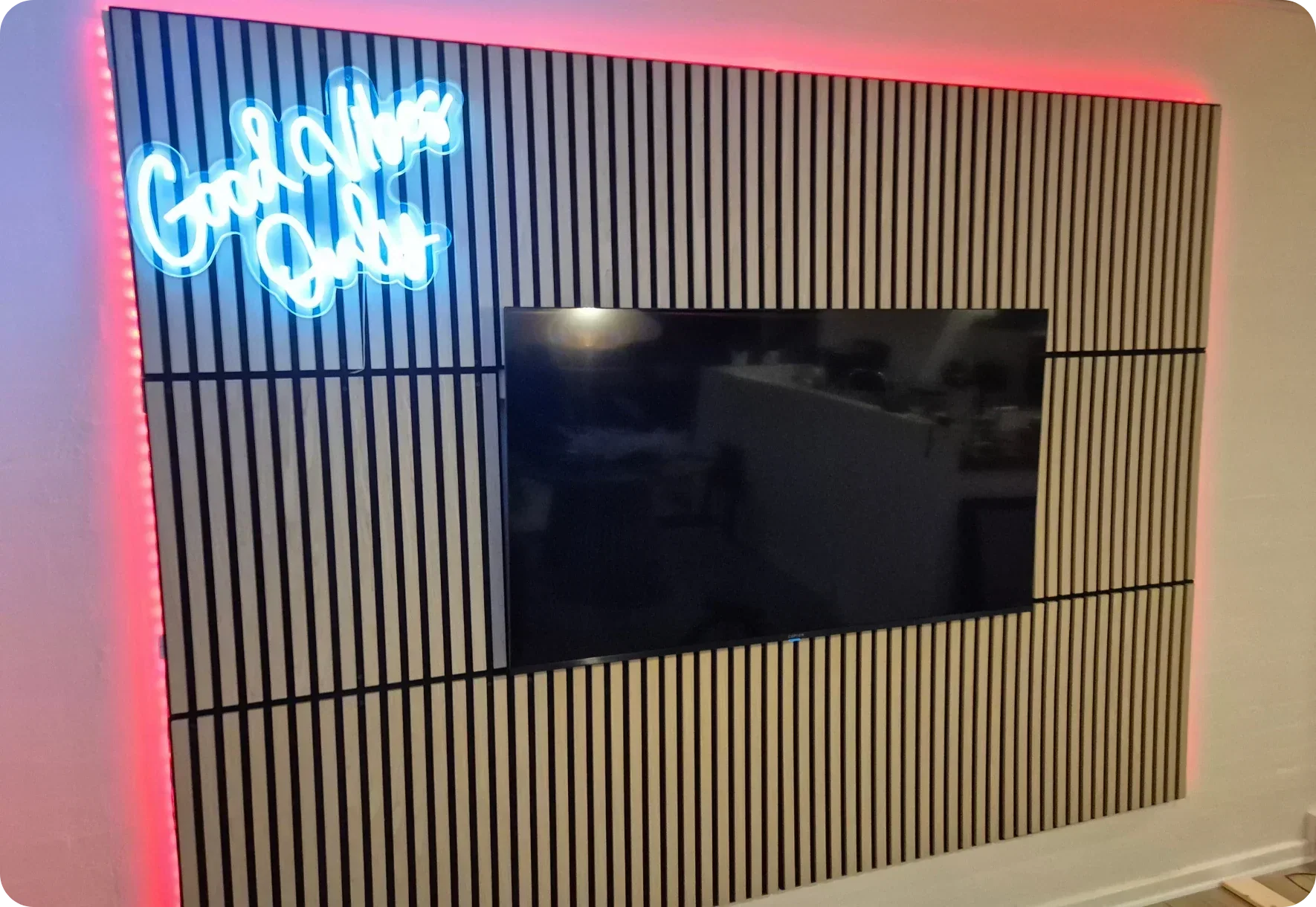
An der TV-Wand lassen dunkle Akustikpaneele Bildschirm, Lautsprecher und Kabel optisch in den Hintergrund treten. Der Bildschirmrahmen verschmilzt mit der dunklen Fläche, und das Ganze wirkt aufgeräumter und kinoartiger, besonders bei ausgeschaltetem Fernseher. Der Filzrücken kann außerdem Schallreflexionen von Dialogen und Musik reduzieren, sodass Sie unter Umständen leiser hören und trotzdem alle Details wahrnehmen.
Das ist eine der beliebtesten Platzierungen für dunkle Töne und einer der Gründe, warum viele Kunden sie für den Medienbereich hellen Varianten vorziehen. Eine LED-Hinterleuchtung hinter den Paneelen verstärkt den Effekt zusätzlich und erzeugt abends einen warmen Lichtschein.
🚪 Eingangsbereiche und Flure
Im Flur kann ein dunkles Paneel hinter einer Bank oder Garderobe Gebrauchsspuren kaschieren und einen markanten, grafischen Empfang schaffen. Die Lamellenstruktur verleiht dem oft schmalen, gesichtslosen Raum Tiefe. Der akustische Effekt hilft, den Bereich weniger laut wirken zu lassen, wenn mehrere Personen gleichzeitig hereinkommen, gerade in Fluren mit harten Böden und parallelen Wänden, die zu Tunnelhall neigen.
🍽️ Küche und Essbereich
Dunkle Akustikpaneele können den Ton dunkler Arbeitsplatten, Armaturen oder Fensterrahmen aufgreifen und den Raum so optisch verbinden. In der Nähe des Esstischs helfen sie, das Klappern von Geschirr und Stimmengewirr zu beruhigen, was gemeinsame Mahlzeiten entspannter machen kann. Besonders gut funktioniert das in offenen Grundrissen, in denen Küchengeräusche in den Wohnbereich tragen.
🛏️ Wand hinter dem Bett
Ein dunkles Paneel hinter dem Bett schafft Boutique-Hotel-Atmosphäre: dramatisch und zugleich warm, besonders mit sanfter Nachttischbeleuchtung. Die Schallabsorption trägt außerdem zu einer ruhigeren Schlafumgebung bei, weil sie den Hall reduziert, den harte Wände erzeugen. Weitere Schlafzimmer-Ideen: Deko-Guide.
💼 Homeoffice oder Besprechungsraum
Als Hintergrund für Videocalls wirkt eine dunkle Lamellenwand professionell und hochwertig, deutlich besser als eine leere Wand oder ein virtueller Hintergrund. Auch der akustische Nutzen ist praktisch: Der Filzrücken kann den Raumhall reduzieren, den Mikrofone aufnehmen, und macht Calls für alle Beteiligten klarer. Mehr zur Büroakustik: Guide zur Akustik im Homeoffice.
Dunkle Paneele mit hellen Elementen ausbalancieren
Der Schlüssel zu gelungenen dunklen Akustikpaneelen ist Kontrast. Sie wirken am besten in heller Umgebung: nicht als dominierende Fläche im Raum, sondern als Akzent, der Tiefe schafft.
Helle Böden: Helles Holz, helle Fliesen oder heller Teppich halten den Raum luftig und offen, auch mit einer dunklen Akzentwand.
Warme Textilien: Leinenvorhänge, Wollteppiche und Möbel in hellen oder natürlichen Tönen verhindern, dass der Raum schwer wirkt. Die weichen Textilien bringen zudem zusätzliche Schallabsorption.
Weiches Licht: Warmweißes Licht (2700-3000 K) bringt Tiefe und Maserung des dunklen Furniers zur Geltung und lässt es warm statt streng wirken. LED-Streifen hinter den Paneelen verstärken diesen Effekt.
Zurückhaltende Deko: Der Rhythmus der Lamellen schafft bereits visuelle Textur, sodass Wände mit dunklen Paneelen meist wenig zusätzliche Dekoration brauchen. Eine schlichte Wandleuchte oder ein gezielt gewähltes Kunstwerk reicht oft aus; zu viel kann die strukturierte Fläche überladen. Mehr zum Dekorieren rund um Paneele: die goldene Regel der Paneel-Deko.

Akustischer Komfort mit klarer Ästhetik
Über ihre visuelle Wirkung hinaus können dunkle Akustikpaneele den Alltagskomfort eines Raums verbessern. Der Rücken aus recyceltem PET-Filz absorbiert einen Teil der Schallreflexionen, die Räume unruhig und ermüdend wirken lassen, vor allem die mittleren und hohen Frequenzen von Stimmen, TV-Ton und Küchengeräuschen.
Ob im Wohnzimmer, Schlafzimmer oder Homeoffice: Das schafft eine Grundruhe, die man eher spürt als sieht. Der Raum fühlt sich schlicht angenehmer an, ohne dass jemand die Paneele als Grund benennen würde. Mehr dazu, was Akustikpaneele tatsächlich leisten: Wie gut sind Akustikpaneele wirklich?
Häufig gestellte Fragen
Nicht, wenn sie als einzelne Akzentwand eingesetzt werden. Dunkle Paneele wirken durch den Kontrast zu helleren umgebenden Flächen: Sie bringen Tiefe, keine Dunkelheit. Entscheidend ist die Balance: Böden, übrige Wände und Textilien hell halten. In einem gut beleuchteten Raum kann eine dunkle Akzentwand den Raum sogar interessanter und bewusster gestaltet wirken lassen. Mehr dazu: Farbguide.
Räume mit gutem Tageslicht und genug Platz für Kontrast: Wohnzimmer (besonders TV-Wände), Schlafzimmer (Wand hinter dem Bett), Flure (wenn sie ausreichend breit sind) sowie Homeoffices oder Besprechungsräume. Sehr kleine, fensterlose Räume besser meiden, dort kann der dunkle Ton erdrückend wirken.
Wir empfehlen in der Regel einen Ton pro Raum für ein einheitliches Bild. Zwischen Räumen funktioniert Abwechslung gut: zum Beispiel dunkle Paneele im Wohnzimmer und hellere im Flur. Mehrere Töne im selben Blickfeld können visuell unruhig wirken.
Auf senkrechten Flächen sammelt sich unabhängig von der Farbe kaum Staub. Die Lamellenstruktur hilft zusätzlich: Der wenige Staub, der sich absetzt, fällt auf einer strukturierten Fläche weniger auf als auf einem glatten, ebenen Paneel. Ein trockenes Tuch oder gelegentliches Abwischen genügt in der Regel.
Der sicherste Weg: eine kostenlose Musterbox bestellen und das dunkle Muster an die Wand halten, morgens und abends, bei Tageslicht und Kunstlicht. Was am Bildschirm mutig aussieht, kann vor Ort warm und ausgewogen wirken, besonders in Räumen mit guter Beleuchtung.
Fazit: Tiefe ohne Dunkelheit
Bei Akustikpaneelen in dunklen Tönen geht es nicht darum, einen Raum dunkel zu machen, sondern darum, Räumen Tiefe, Struktur und Kontrast zu geben, die sonst flach oder undefiniert wirken könnten. Zusammen mit dem akustischen Nutzen des Filzrückens entsteht ein Raum, der visuell markant und spürbar angenehmer ist. Als einzelne Akzentwand in heller Umgebung kann der Effekt dramatisch sein, ohne schwer zu wirken: eine moderne, ruhige Kulisse für den Alltag.
Erleben Sie, wie dunkle Töne wirken, in Ihrem eigenen Licht.
Kostenlose Musterbox bestellen → Alle Paneele ansehen →Die Farbwahrnehmung variiert je nach Lichtverhältnissen, Monitorkalibrierung und persönlichem Empfinden. Für die endgültige Farbentscheidung empfehlen wir Materialmuster. Die akustische Wirkung hängt von vielen Faktoren ab, darunter Raumgröße, Platzierung der Paneele und abgedeckte Fläche. Genannte Preise entsprechen den zum Zeitpunkt der Veröffentlichung gültigen Preisen und können sich ändern.



Hinterlasse einen Kommentar
Diese Website ist durch hCaptcha geschützt und es gelten die allgemeinen Geschäftsbedingungen und Datenschutzbestimmungen von hCaptcha.