




Why large blank walls create uncomfortable spaces — and what many of our customers do about it
The Problem with Large Blank Walls
🔊 Sound builds up — all day
In a typical office with hard walls, hard floors, and large windows, sound has nowhere to go. Every conversation, keyboard click, phone call, and closing door bounces off surfaces and adds to a growing layer of background noise. By the afternoon, many people find themselves speaking louder without realizing it — and feeling more tired than the actual work would explain.
🗣️ Conversations become unclear
When reverberation is high, speech gets muddled. In meeting rooms, people may ask each other to repeat themselves. On calls, the microphone picks up room echo — making the person on the other end sound like they're in a bathroom. This can be especially noticeable in open-plan offices and glass-walled conference rooms. More on the science: how good are acoustic panels really?
😤 The space just doesn't feel right
Many of our customers describe the same thing: "The room looks fine, but something feels off." That feeling is often acoustics. A space with too much reverberation can feel cold, impersonal, and tiring — even when the interior design is otherwise well done. It's one of the most overlooked factors in how comfortable a room feels.
 What Our Customers Notice After Adding Panels
✅ What we hear from customers
• Conversations in meeting rooms feel clearer and less tiring
• Open-plan offices feel calmer — the constant "buzz" is reduced
• Phone and video calls sound more professional
• Visitors and clients comment on how the space looks and feels
• Staff report feeling less fatigued at the end of the day
• The panels become a design feature — not just an acoustic fix
These are subjective observations from customers, not guaranteed results — every space is different. But the pattern is consistent: reducing reverberation from large hard surfaces tends to make a noticeable difference in how a room feels and sounds. For the technical side of how absorption works: absorption vs insulation explained.

Where to Place Panels in an Office or Commercial Space
1. Meeting Rooms & Conference Rooms
This is often where the impact is felt most strongly. Glass walls and hard tables create a reverberant environment that can make meetings tiring. An accent wall with 6–8 panels on the wall opposite the screen or whiteboard can help absorb the reflections that muddle speech. For video calls: panels behind the camera-facing side of the table can also improve audio quality for remote participants.
2. Open-Plan Office — Feature Wall
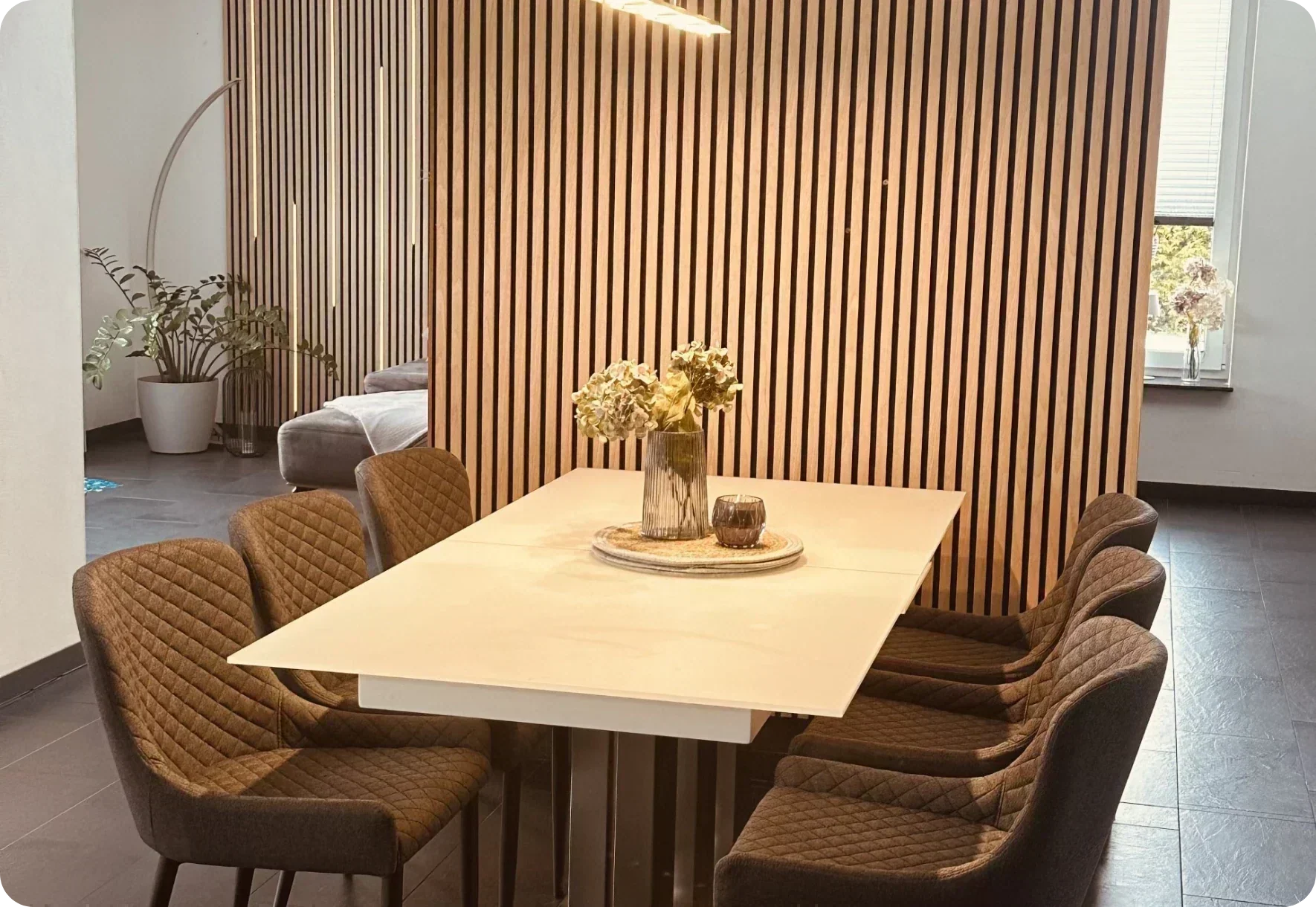
A large accent wall in the main workspace can absorb some of the ambient noise that builds up during the day. It also serves as a visual anchor — a design element that makes the space feel more intentional and less generic. Consider the wall opposite the main seating area, or any large blank surface that currently reflects sound back into the room.
3. Reception & Waiting Areas
First impressions matter. A reception area with acoustic panels tends to feel more premium and considered than one with bare walls. Beyond aesthetics, panels can help reduce the echo from phone calls, conversations, and foot traffic — creating a calmer experience for visitors and reception staff alike.
4. Hallways & Corridors
Long corridors with parallel hard walls can create a tunnel effect — every footstep, door, and conversation echoes. Panels on one side of the corridor can help break this effect. This is one of the simplest placements and often delivers a surprisingly noticeable improvement. More on corridor acoustics: room acoustics guide.
5. Private Offices & Focus Rooms
For individual offices or small focus rooms: 3–4 panels behind the desk can help improve call quality and reduce the reverberant feeling that small rooms with hard walls can create. It also serves as a professional video call background — better than a blank wall or a virtual background.
Panel Recommendations by Space
| Space | Recommendation | Panels |
|---|---|---|
| Meeting room (15–20 m²) | 1 accent wall | 6–10 panels |
| Open-plan feature wall | Large accent wall | 10–15 panels |
| Reception area | Behind counter / entrance wall | 4–8 panels |
| Corridor (one side) | Along one wall | 6–12 panels |
| Private office | Behind desk | 3–4 panels |
| Focus room / phone booth | 1–2 walls | 3–6 panels |
For exact panel calculations based on your wall dimensions: size calculator. For a breakdown of different panel types and which works best for commercial spaces: panel types guide.
Why Wood Veneer — Not Just Foam or Felt
In a commercial space, appearance matters as much as function. Foam pyramids or plain PET felt panels can solve the acoustic problem — but they tend to look like an acoustic problem was solved. Acoustic panels with a real wood veneer finish can do both: the MDF slats create an architectural surface, while the PET felt backing absorbs sound — design and function in one product.
Many of our commercial customers specifically choose panels with a wood veneer finish because they don't want the space to look like a recording studio. They want it to look like a space that was designed with intention — where acoustics were considered alongside aesthetics. More on the comparison: 4 types of acoustic panels.
Design That Works for Business
Client-facing spaces: A wood accent wall in a meeting room or reception area can communicate quality and attention to detail — often without anyone consciously noticing the panels. It simply feels like a well-designed space.
Employee spaces: In open-plan offices, acoustic comfort is one of the most common complaints. Adding absorption can be one of the most cost-effective ways to improve the daily working experience — without structural changes to the building.
Branding: Unlike generic acoustic solutions, panels with a wood veneer finish can complement brand aesthetics. Lighter tones for Scandinavian-style tech offices. Darker tones for premium law firms or financial services. The material itself becomes part of the interior language. More on choosing colors: color guide.
Frequently Asked Questions
Many of our customers report a clear difference — especially in meeting rooms and open-plan spaces where conversations overlap. The change tends to be most noticeable in rooms with large hard surfaces (glass, concrete, plaster) where reverberation is currently high. More on what panels can and can't do: honest expectations guide.
They can reduce reverberation, which may lower the perceived sound transmission between spaces. However, for true soundproofing (making conversations inaudible next door), structural measures like thicker walls are typically required. Panels are often an effective first step — especially combined with proper doors and soft furnishings. More: absorption vs insulation.
It depends on the brand and environment. Lighter tones tend to feel open and modern. Medium tones can add warmth and professionalism. Darker tones create drama and contrast — popular for feature walls in reception areas or boardrooms. The safest approach: order a free sample box and test in your actual space with your actual lighting. Full guide: color guide.
Most installations can be done in-house with mounting adhesive — no specialized tools required. A meeting room (6–8 panels) typically takes 2–3 hours. For larger projects (full office floors, ceilings), a contractor or handyman may be more practical. Full installation details: project guide.
Common alternatives include ceiling baffles, desk dividers, carpet tiles, and freestanding absorbers. Acoustic panels with a wood veneer finish tend to offer the strongest combination of acoustic function and visual design — they look like an interior upgrade rather than an acoustic fix. For a full comparison of panel types: panel types guide.
Yes — LED strips behind the panels can create a warm halo effect that makes the wall a true focal point. This is especially popular in reception areas, boardrooms, and co-working spaces. About 15–20 minutes extra installation time. Full guide: LED lighting guide.
Conclusion: Comfort Is Not a Luxury — It's How Good Spaces Work
The difference between a space that feels uncomfortable and one that feels right is often invisible: it's acoustics. Large blank walls reflect sound. That reflected sound builds up. And by the end of the day, people feel more tired than they should. Acoustic panels can change that — and look good doing it. Many of our commercial customers tell us it was one of the simplest and most impactful upgrades they've made to their space.
Customer observations are subjective and may not reflect every installation. Acoustic performance depends on many factors including room size, existing surfaces, panel placement, and coverage. Results may vary. Fire safety and cleaning requirements vary by region and building type — consult local regulations. Prices mentioned correspond to the current prices at the time of publication and are subject to change.


Leave a comment
This site is protected by hCaptcha and the hCaptcha Privacy Policy and Terms of Service apply.