



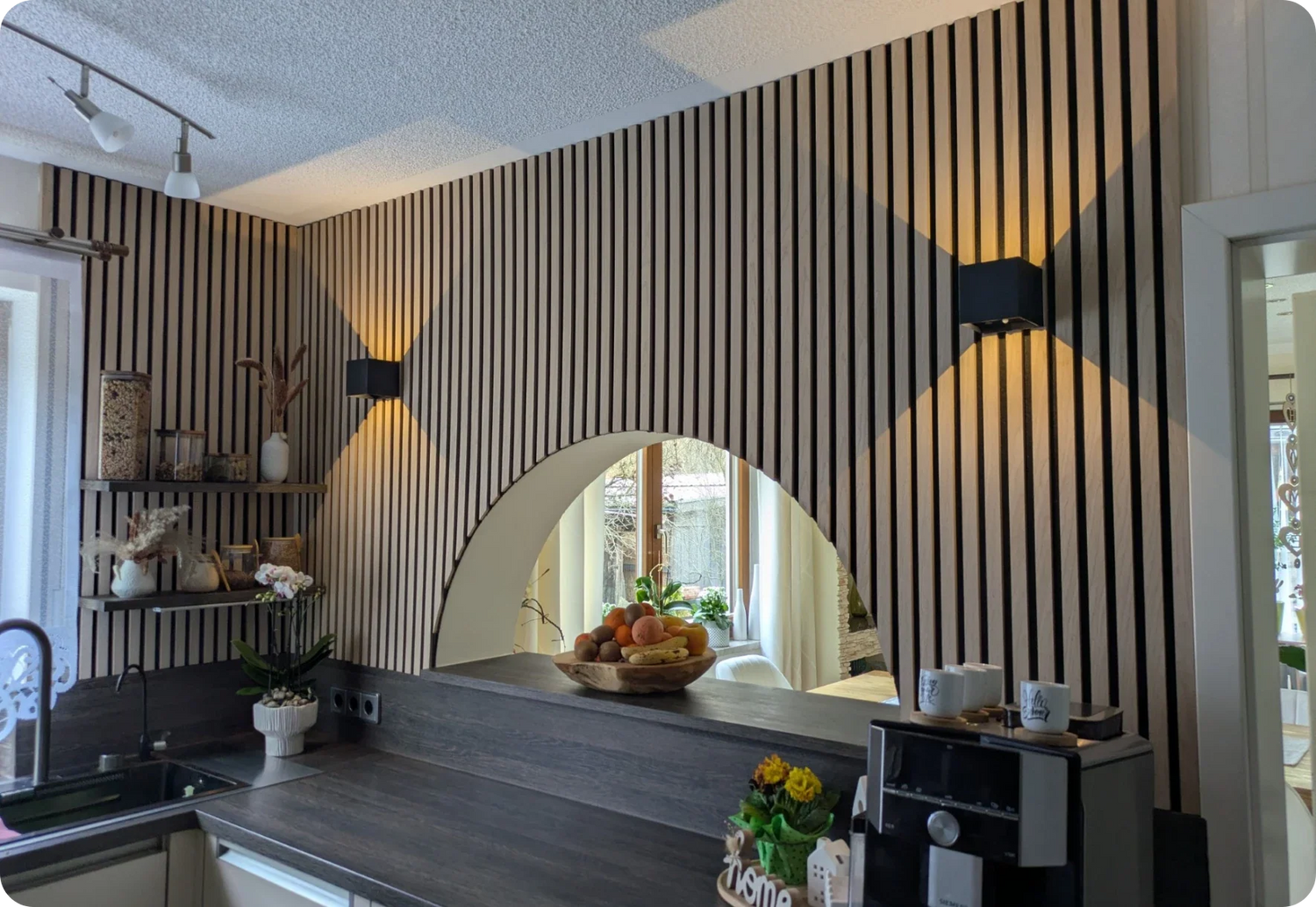
Choosing the right tone for your acoustic panels - and why color is half the design decision.
Why tone matters more than people think
The same panel in a different tone reads as a completely different design. Color isn't just decoration - it changes how spacious the room feels, how the panels integrate with existing furniture, and how much attention the wall draws. A Light panel wall in a small bright room reads as airy and Scandinavian. The same wall in Black reads as dramatic and architectural. Same panels, same room, different decision.
That's why most "wrong" panel installs aren't actually wrong - they're just the wrong tone for the room. The slats are doing what they should; the color is fighting the rest of the space. Choosing the tone deliberately, against the room's real lighting and existing materials, is what separates a wall you love from one you tolerate.
5 tips for choosing your tone
1. Match with your existing interior
Look at your floors, walls, and furniture. What tone complements or highlights what's already there? Neutral tones like Light or Light Brown create a calm, cohesive feel - they recede into the space. Smoked and Black create a stronger feature - they pull the eye to the wall. Both work; the question is which role you want the panels to play.
2. Decide: blend in or stand out
If you want the panel wall to be discreet - texture more than statement - choose a tone close to your existing wall color. If you want it to be a clear feature, go for contrast. Smoked or Black against a light wall reads as intentional, framed, hotel-like. Light or Light Brown against a darker wall does the same in reverse.
3. Consider function and atmosphere
Calming tones like Light or Light Brown suit rooms where you want to relax - bedrooms, reading nooks, living rooms with linen sofas. Smoked and Black bring warmth and depth to larger social areas, offices, and TV walls. The tone sets the room's emotional baseline before any furniture or lighting is added.
4. Pay attention to light and room size
Darker tones absorb more light and can make small rooms feel smaller. Light tones reflect and open the space. A north-facing bedroom with limited daylight will read very differently in Black than in Light - sometimes that's the goal, sometimes the opposite. Check the room's actual lighting at the time of day you'll use it most.
5. Choose timeless options if unsure
If you can't decide, go with Light Brown or Smoked. Both work across most interior styles, age gracefully, and don't lock you into a specific aesthetic. This makes it easier to update the room later with new furniture, wall colors, or lighting - without the panels suddenly looking dated.
How each tone reads in real rooms
Light - bright, airy, Scandinavian
The lightest tone in the range. Best in small or north-facing rooms where you want to maximise daylight, and in minimalist interiors with white walls, pale floors, and clean lines. Reads as calm and architectural rather than warm. Often chosen for home offices, small bedrooms, and entryways where openness matters more than coziness.
Light Brown - warm, golden, timeless
The most versatile light tone. Pairs naturally with wood floors, linen and wool textures, and earth-tone palettes. Reads warm without being heavy, so it works in both small and large rooms. Particularly popular in family living rooms and bedrooms where the goal is "warm and inviting" without statement-piece commitment.
Smoked - deep, warm, hotel-like
The most popular tone overall, and the default choice for TV walls. Dark enough to give the room real presence, warm enough to feel inviting rather than cold. Works in almost any style - Scandinavian, modern, industrial, classic. If you can't visit our showroom and have to choose blind, Smoked is statistically the safest pick.
Black - dramatic, modern, architectural
The boldest choice. Best in large rooms with plenty of natural light - the contrast makes the wall a clear architectural statement. Common in modern offices, design-forward living rooms, and feature walls behind kitchen islands. In small or dimly-lit rooms it can feel heavy; in the right room it's striking.
Tone-by-tone comparison
| Tone | Mood | Best lighting | Best for |
|---|---|---|---|
| Light | Bright, airy | North-facing or limited daylight | Small rooms, minimalist interiors, home offices |
| Light Brown | Warm, golden | Any natural light | Living rooms with wood floors, bedrooms, family spaces |
| Smoked | Deep, warm | Any - most versatile | TV walls, hotel-style bedrooms, most rooms |
| Black | Dramatic, modern | Strong natural light | Large rooms, modern offices, statement walls |
Frequently asked questions
Smoked accounts for the largest share of installs because it sits in the middle of the range and works in most rooms. Light Brown is the second most popular, especially for living rooms and bedrooms with wood floors. Light and Black are stronger style choices - chosen deliberately for specific rooms rather than as the safe default.
Yes, but with intent. Two tones can work as a feature - for example Smoked behind the TV and Light Brown on an adjacent wall - but the contrast needs to feel deliberate, not accidental. Stick to two tones, not three; alternate full walls, not slats within the same wall. When in doubt, single tone is the cleaner choice.
Warm bulbs (2700K-3000K) push all tones slightly warmer - Light reads more golden, Smoked reads more chocolate. Cool bulbs (4000K+) make Light read cooler and Smoked grayer. Northern daylight is neutral; southern daylight is warmer. This is why a sample box held in the actual room beats any product photo.
Match the warmth of the dominant material - usually the floor. Wood floors and warm rugs go with Light Brown or Smoked. Cool concrete, polished tile, or grey carpet go with Light or Black. The panels don't need to match any specific furniture piece, just harmonise with the overall warmth of the space.
Real wood veneer, like all real wood, can lighten slightly with prolonged direct sunlight over years. The change is gradual and subtle, similar to a wood floor. Indoor installs away from constant direct sun keep their tone for many years. Water-based finishes and the protective veneer layer slow the process significantly.
Yes. The free sample box contains real cut sections of each tone - the same veneer and finish as the full panels. Hold each piece against your wall in different lighting through the day before committing to 4-6 panels. Order the sample box here.
The right tone isn't the safest - it's the one that fits the room
Tone choice gets treated as a secondary decision - picked from a product photo after the bigger questions are settled. In practice it's the opposite: the tone determines whether the panel wall reads as deliberate design or as "those panels everyone has". The slats are the same; only the tone separates the result from the install next door.
The good news is the decision doesn't have to be made blind. A sample box, your actual wall, and 30 seconds of comparing - that's the whole process. Everything else is theory.
Color perception varies depending on lighting conditions, monitor calibration, surrounding wall colors, and personal preference. Product photos are indicative only - material samples are recommended for final color decisions. Real wood veneer can show subtle natural variation between panels, which is characteristic of real wood and not a defect. The individual effect of acoustic panels can vary depending on room size, materials, and furnishings. Acoustic panels reduce reverberation and echo - they do not provide complete sound isolation against external noise.


Leave a comment
This site is protected by hCaptcha and the hCaptcha Privacy Policy and Terms of Service apply.