



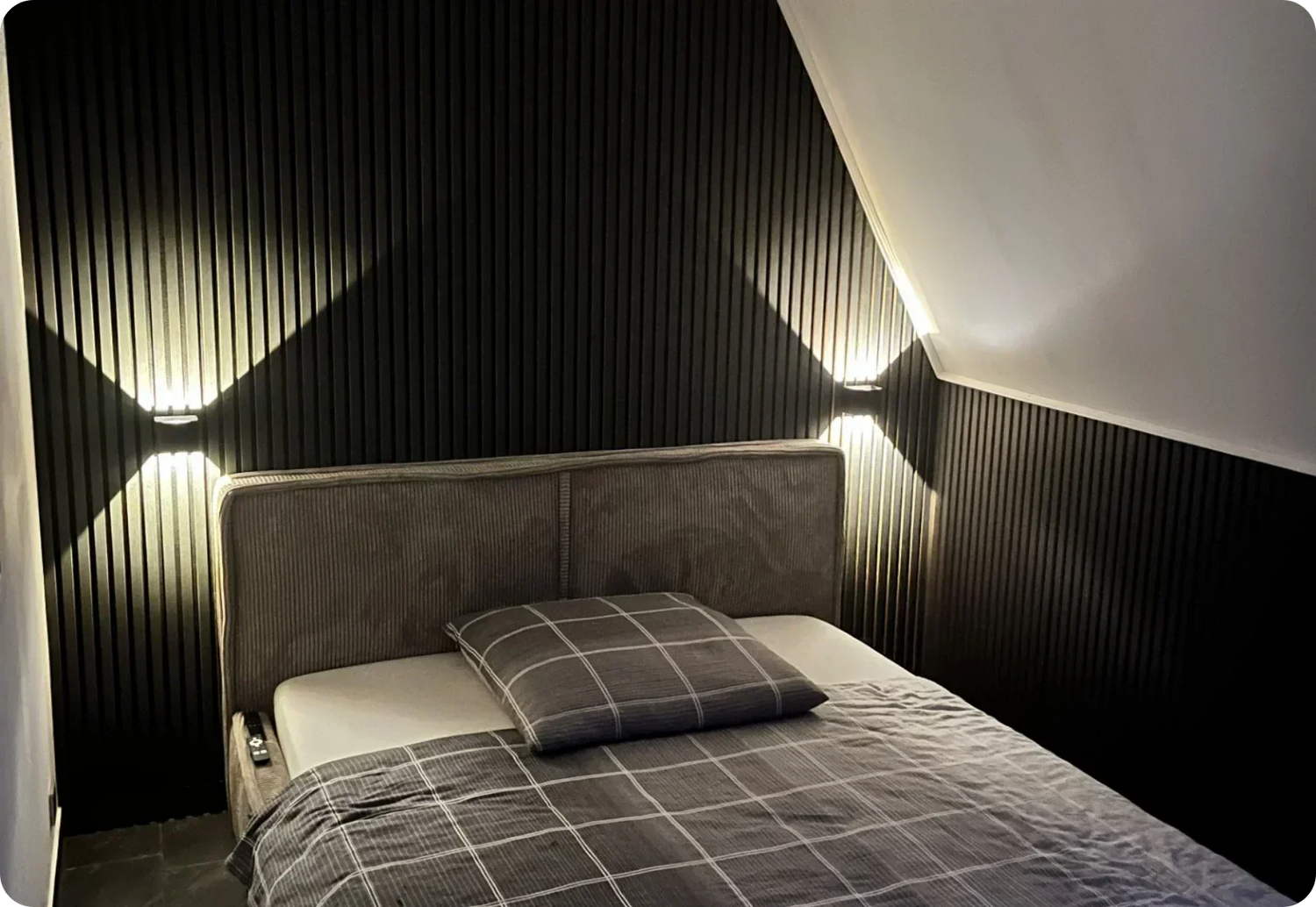
The boldest tone in the range — and the one with the biggest wow-effect
Why Dark-Toned Acoustic Panels?
Maximum contrast: Dark on light is one of the strongest color combinations in interior design. A dark accent wall in an otherwise bright room draws the eye immediately and defines the space. Few other tones can create comparable depth.
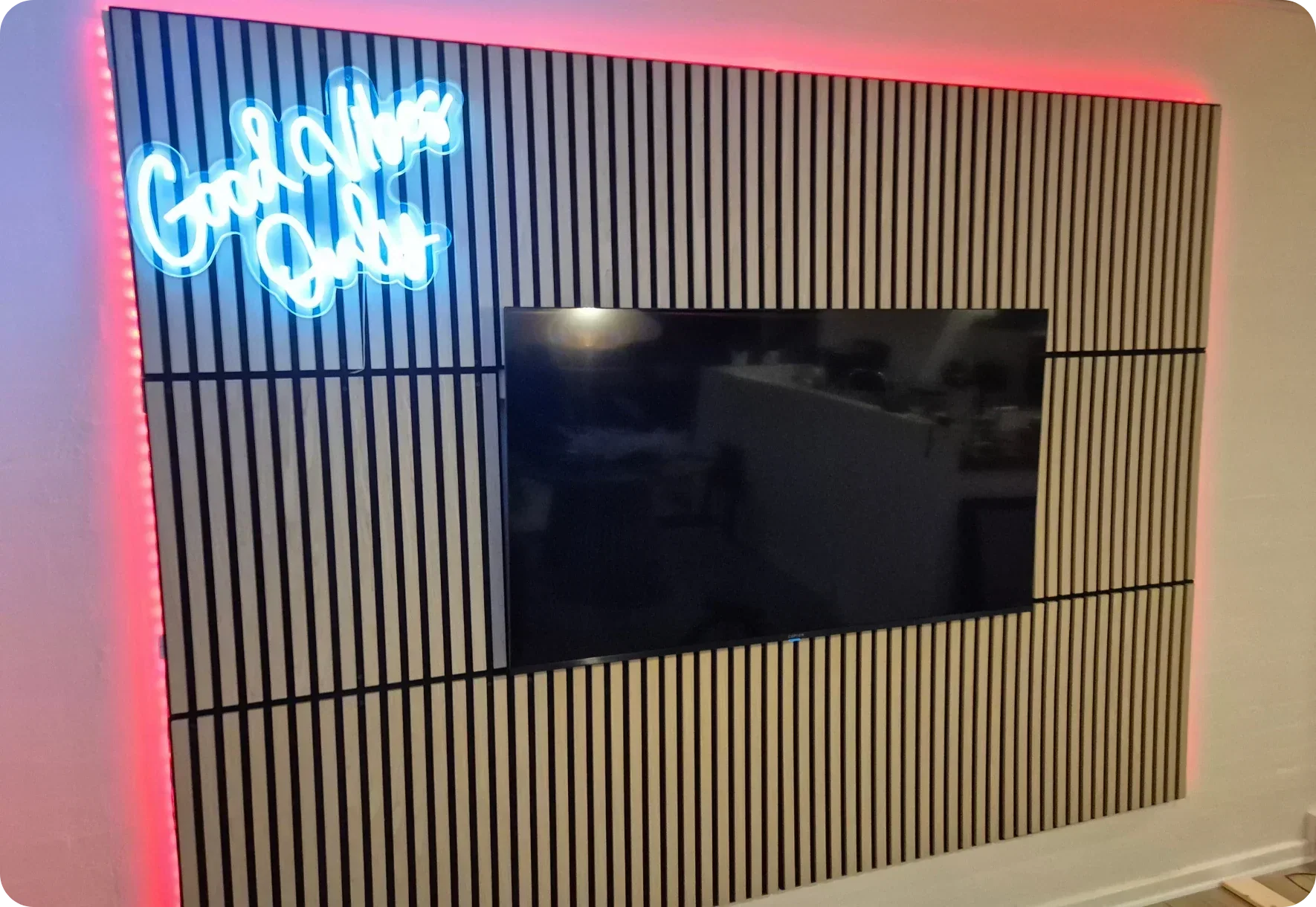
TV wall perfection: Dark panels are often the most popular choice for TV walls. The reason: a switched-off TV is a dark rectangle — on a dark wall, it can visually disappear. This can solve the "dark screen on white wall" problem that many find distracting. More: decoration ideas.
Architectural feel: The dark wood veneer surface with its slatted structure can evoke high-end design hotels and modern architectural interiors. The look tends to be simultaneously minimalist and warm — because the real wood veneer shows a subtle grain that adds life and depth, something flat plastic finishes typically cannot achieve.

Where Dark Panels Work Best
📺 1. TV Wall — the classic
The single most popular placement for dark-toned panels. 5–6 panels behind the TV, optionally with LED backlighting for a cinema effect. The dark surface can also reduce light reflections, which may make the screen appear more contrast-rich during daytime viewing.
🛋️ 2. Large living rooms (from ~20 m²)
In spacious rooms with bright walls and plenty of natural light, a dark accent wall can set a dramatic counterpoint. The dark surface tends to visually "anchor" the room and give it depth, without making it feel smaller. The key: enough brightness and contrast from the surrounding surfaces.
🏗️ 3. Lofts and industrial style
In lofts with exposed concrete, metal shelving, and high ceilings, dark-toned panels can be a natural complement. The slatted structure picks up the industrial character while introducing the warmth of real wood — a balance that concrete and metal alone typically cannot create.
🚪 4. Bright entrance areas
A generous entrance with overhead light or a glass front: dark panels can make an immediate statement. Guests enter and are greeted by a slatted wall that feels representative, modern, and memorable.
💻 5. Home office — studio look
For content creators, podcasters, and anyone who wants a professional video call background: dark panels can create a studio look that stands out in Zoom and Teams. The dark background tends to highlight your face and can feel more professional than lighter alternatives. More: how panels improve calls.

Where Dark Panels May Not Work
⚠️ Consider lighter tones instead in these situations:
• Rooms under ~12 m² — dark tones absorb light and can make small rooms feel even smaller
• Rooms without natural light — windowless hallways, interior bathrooms, basements. The panels may read as a "dark wall" rather than an "elegant contrast"
• Low ceilings under 240 cm — dark walls in low rooms can visually push the ceiling even lower
• Rooms with mostly dark furniture — dark panels + dark sofa + dark floor = too much darkness. At least one strong light counterweight is typically needed
In all of these cases, lighter tones may be the better choice. More on choosing the right tone: color guide.
Real Wood Veneer vs Plastic — Why It Matters Most in Dark Tones
The difference between real wood veneer and a plastic foil finish is especially visible in dark tones. Real veneer has a subtle, translucent grain — the dark tone feels alive, with depth and variation that changes depending on the angle and lighting. Plastic finishes tend to look flat, uniform, and can reflect light unnaturally from the side.
If you place a real wood veneer sample next to a plastic panel in the same dark tone, the difference tends to be immediately visible — the natural grain gives the surface a character that plastic simply cannot reproduce. The best way to see this for yourself: order the free sample box.
Styling Tips for Dark Panels
Set bright counterweights
Dark panels need contrast to work as an accent rather than as a dark room. White or light grey furniture, light cushions, a bright rug — at least 50% of the room should ideally remain light so the dark wall feels like a deliberate design choice, not a cave.
Metal accents
Brass, gold, or copper against a dark panel surface is one of the most elegant combinations in interior design. Wall lamps, picture frames, or hooks in brass can create warm focal points on the dark surface.
LED lighting
Indirect light behind or beside the panels can be especially impactful with dark tones — it brings the slat structure to life and prevents the wall from reading as a flat dark surface. A warm white LED strip (2700K) is often all that's needed for a dramatic evening effect. More: LED lighting guide.
Plants
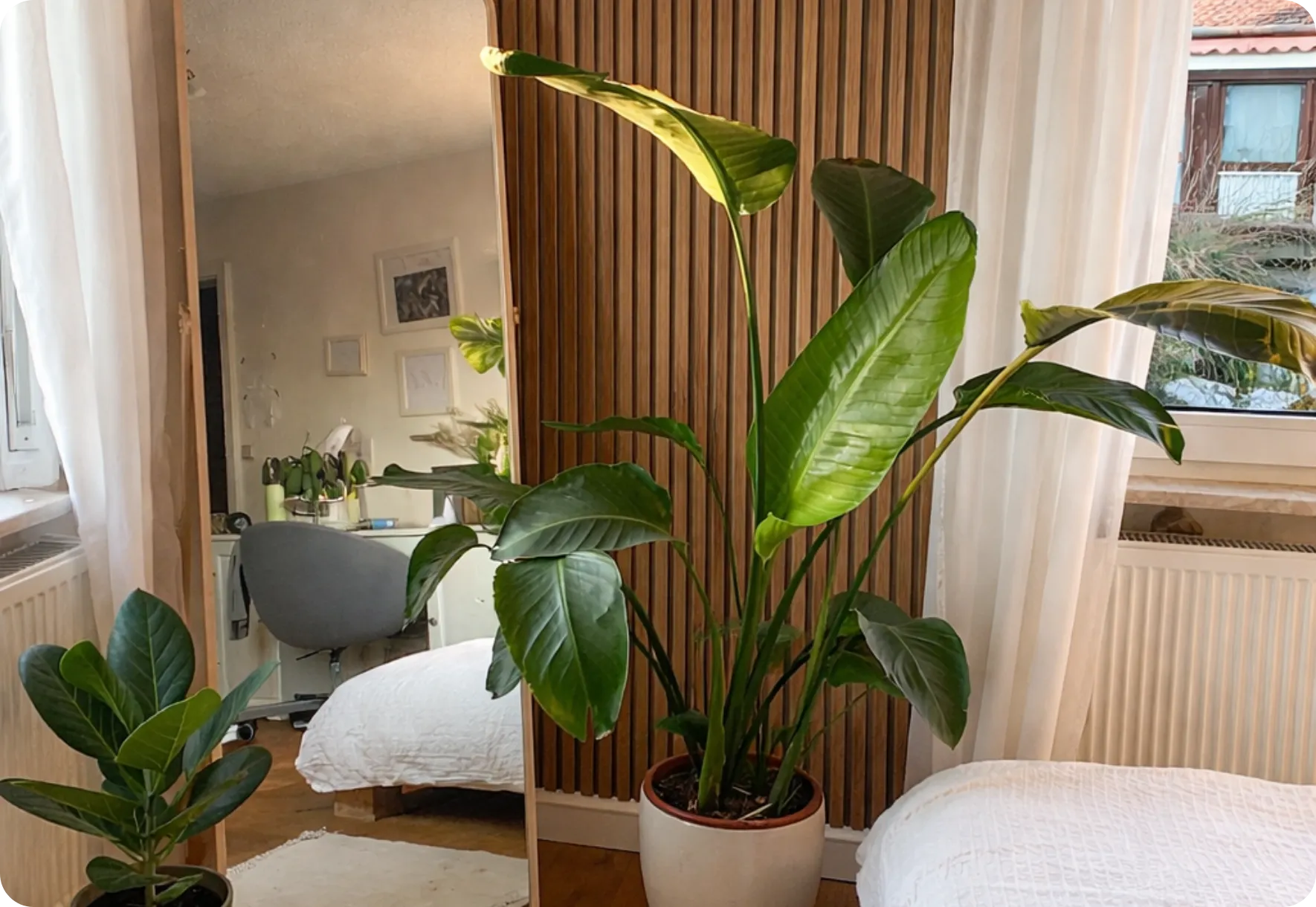
Green plants in front of a dark background can appear especially vivid — the contrast intensifies the color of the foliage. A simple shelf with trailing plants or a large floor plant can complement the wall beautifully.
Frequently Asked Questions
They tend to work best in bright, spacious rooms from approximately 15 m² with natural light: living rooms, TV walls, lofts, generous entrance areas. Generally not recommended for small, dark rooms under 12 m², windowless hallways, or rooms with low ceilings. In those cases, lighter tones are usually the better choice. More: color guide.
Silentwood's dark-toned panels use real wood veneer — the natural grain remains subtly visible and gives the dark tone depth and character. Many budget alternatives use plastic foil — uniform, shiny, and without natural variation. The difference is especially noticeable in dark tones.
More than on lighter tones — this is true for all dark surfaces. However, the slatted structure helps: dust tends to settle in the grooves and is less visible than on a smooth flat dark surface. A microfiber cloth every few weeks is generally enough to keep them looking clean.
White (maximum contrast), light grey (elegant, modern), beige or cream (warmer, cozier). For furniture: light natural wood tones, light upholstery. Metal accents in brass or gold. As a general guideline: avoid more than roughly 30% additional dark surfaces in the room — otherwise it can feel too heavy.
We generally recommend one tone per room for visual consistency. Multiple tones in the same field of view can feel restless. Between rooms, variation works well — for example dark panels in the living room and lighter panels in the hallway. More on combining: color decision guide.
On a single accent wall in a well-lit room: typically no. They can actually add depth, making the wall feel like it recedes. On multiple walls or in small rooms without natural light: they can make the space feel heavier. The rule of thumb: the room needs enough light and contrast for the dark tone to read as a design choice rather than a dark room.
Conclusion: A Statement — Not a Background
Dark-toned acoustic panels are not for every room — but where they work, the effect can be striking. The combination of a real wood veneer surface, deep tone, and vertical slat structure creates a look that few other wall treatments can match. A TV wall where the screen disappears. A living room that feels anchored and intentional. An entrance that makes an impression before a word is spoken. For those willing to go bold, the result tends to speak for itself.
Color perception varies based on lighting conditions, monitor calibration, and individual preference. Material samples are recommended for final color decisions. Acoustic performance depends on many factors including room size, panel placement, and coverage area. Prices mentioned correspond to the current prices at the time of publication and are subject to change.


Leave a comment
Ovo je web-mjesto zaštićeno sustavom hCaptcha, čija pravila zaštite privatnosti i uvjeti pružanja usluge vrijede.