



Why real wood veneer matters - and which of the three tones may fit your room
Why Real Wood Veneer?
Timeless aesthetics
Wood has been the most valued material in furniture and interior design for centuries. The distinctive grain - fine pores, subtle knots, natural color variation - is immediately recognizable as real wood. No printed plastic foil can reproduce this natural diversity. Every panel with a real wood veneer surface is unique - the grain pattern differs slightly from panel to panel, just like real wood furniture.
Universal compatibility
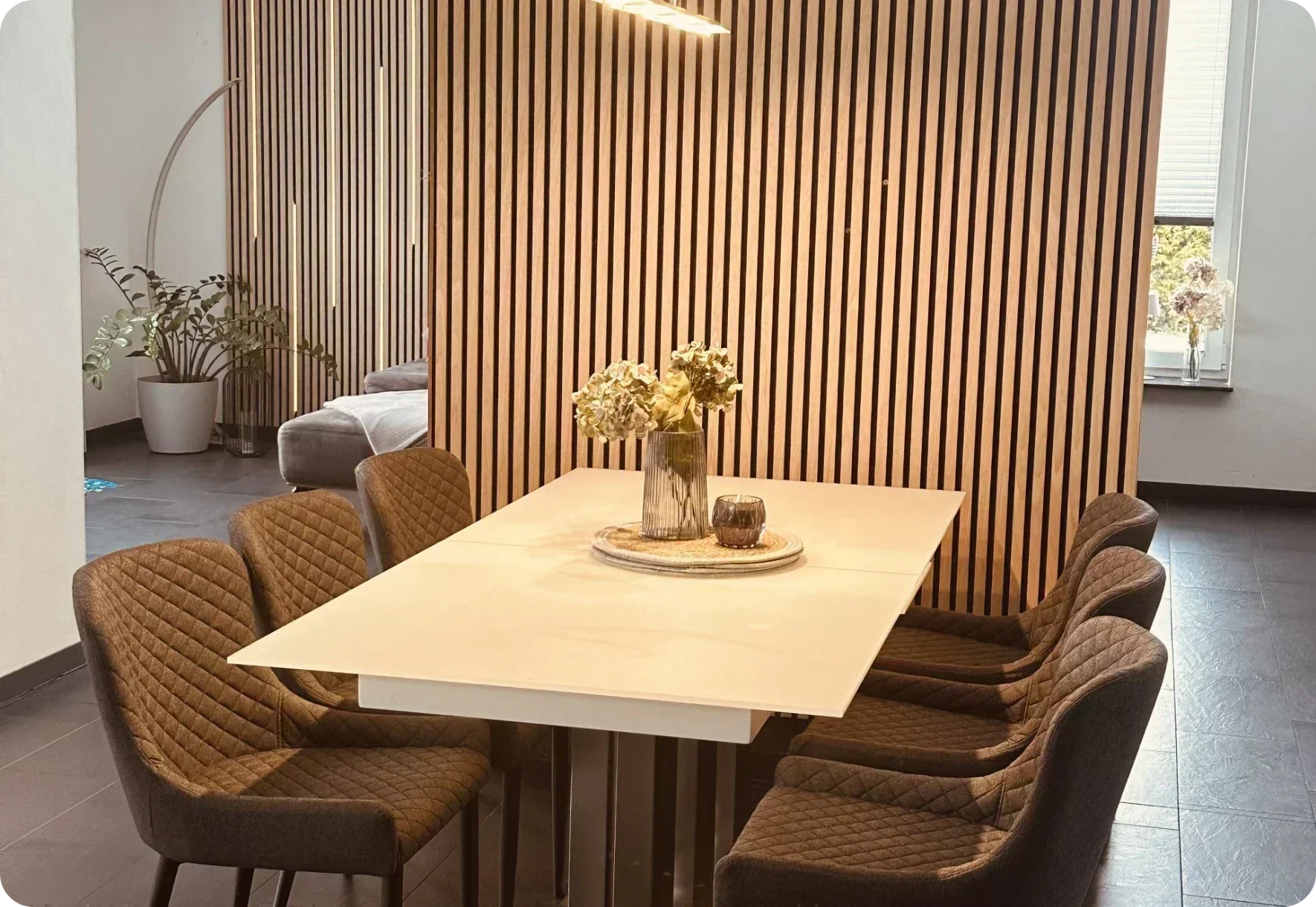
Wood veneer tones tend to harmonize with almost any material: stone, concrete, glass, metal, leather, textile. They can work with light and dark floors, with modern and classic furniture. This makes wood veneer one of the safest choices for a wall upgrade - even if you change your furniture in 5 years, the panels can still work with your interior.
A surface that ages well
Real wood veneer tends to develop a subtle patina over the years - the tone may deepen slightly and the grain can become more pronounced. This is generally considered a positive quality of natural materials. Plastic foil, by contrast, tends to yellow, peel, or look dated over time. More on longevity: sustainability guide.
The 3 Wood Veneer Tones
Light - bright, fresh, Scandinavian
The lightest tone in the range. A natural, untreated wood appearance with a bright, almost honey-toned base. The Light finish tends to feel open and airy - ideal for rooms where brightness and spaciousness are the priority.
Often works well in: Hallways (brings brightness to narrow spaces), smaller bedrooms (can visually open up the room), kitchens (complements light-colored fronts and surfaces).
Tends to pair with: White furniture, light wood floors (birch, maple tones), grey tones, Scandinavian and minimalist interiors.
Light Brown - warm, golden, natural
The middle tone - warmer than Light, but noticeably brighter than Smoked. Light Brown has a golden undertone that can evoke sun-warmed wood. The grain tends to be more pronounced than in the Light tone, giving the surface extra visual depth.
Often works well in: Living-dining areas with existing wood floors, rooms with natural tones (linen, jute, terracotta), attic spaces (cozy, cabin-like atmosphere).
Tends to pair with: Wooden furniture, earth tones, leather sofas, country-style and bohemian interiors.
Smoked - deep, warm, elegant
The deepest of the three warm tones - a rich mid-to-dark brown with especially expressive grain. The Smoked finish radiates warmth and sophistication. It tends to be one of the most versatile tones because it can work in bright Scandinavian rooms as well as in warmer, more traditional interiors.
Often works well in: Living rooms (accent wall behind sofa), bedrooms (headboard wall), home offices (professional video call background), stairwells and corridors.
Tends to pair with: Grey, white, dark tones, deep green, velvet, wool - generally the most adaptable tone across different interior styles.
There is also a fourth, darker tone available for those who want maximum contrast and drama. More on that: dark-toned panels guide.
Comparing the Tones
| Property | Light | Light Brown | Smoked |
|---|---|---|---|
| Brightness | Bright | Medium | Deeper |
| Undertone | Neutral / cool | Golden / warm | Brown / warm |
| Grain visibility | Subtle | Moderate | Pronounced |
| Room effect | Opens, widens | Warms, naturalizes | Adds depth, coziness |
| Best for small/dark rooms | ✅ Yes | ⚠️ Depends on light | ❌ Needs good light |
| Best for large/bright rooms | ✅ Yes | ✅ Yes | ✅ Yes |
For a full room-by-room decision table including the dark tone: complete color guide.
Real Wood Veneer vs Printed Plastic Foil
Many panels sold as "wood panels" actually use a printed plastic foil with a wood-look pattern on MDF. The difference is both visible and tactile:
Real wood veneer: Warm to the touch. Natural surface with fine pores. Unique grain per panel - no two are identical. Ages gracefully (patina). Typical lifespan: 15+ years.
Printed plastic foil: Smooth and cool to the touch. The grain pattern repeats every 60-80 cm. Tends to peel, yellow, and look artificial over time. Typical lifespan: 5-10 years.
The simplest way to tell the difference: hold a real veneer sample next to a foil panel. The texture, warmth, and visual depth are noticeably different. Order the free sample box to see and feel the real material. More on the material comparison: our materials guide.
Frequently Asked Questions
Yes - all Silentwood panels use a real wood veneer surface (0.3-0.6 mm) on MDF slats with a recycled PET felt backing. No plastic foil, no printed decor. Every panel has a unique, natural grain. More: our materials guide.
The Smoked finish tends to work in the widest range of rooms and interior styles - it can complement grey, white, dark, and warm interiors equally well. Light is the safest choice for small or dark spaces. Light Brown works especially well where warmth and natural character are desired.
We generally recommend a slightly different tone rather than an exact match - it adds depth without clashing. Light-toned floor → Smoked panels. Dark-toned floor → Light panels. The subtle contrast tends to make both surfaces look more intentional.
Slightly - as with all natural wood. The Light finish may develop a slightly warmer tone over the years. The Smoked finish tends to remain very stable. This natural change (patina) is generally considered a positive quality - it gives the material character that increases over time rather than diminishing.
We recommend a single tone per wall and room for visual consistency. Between walls and floors, different tones are common and often desirable. Between rooms, variation works well - for example Smoked in the living room, Light in the hallway. Full guide: color guide.
Don't rely on your screen - every monitor shows wood tones differently, and room lighting changes everything. The safest approach: order the free sample box, hold all samples against your wall in the morning and in the evening, and decide in your own lighting. It takes 30 seconds and can prevent the most common (and most expensive) mistake.
Conclusion: The Safe Choice Is Still a Statement
Wood veneer panels may be one of the safest wall upgrades you can make - but that doesn't mean they're boring. Each of the three tones creates a distinctly different atmosphere: Light opens and brightens, Light Brown warms and naturalizes, Smoked adds depth and elegance. The real wood veneer surface ensures that the result looks and feels like a genuine material, not a decorative imitation. Which tone is yours? The sample box can tell you in 30 seconds.
Color perception varies based on lighting conditions, monitor calibration, and individual preference. Material samples are recommended for final color decisions. Grain patterns are natural and vary between panels. Prices mentioned correspond to the current prices at the time of publication and are subject to change.


Zanechať komentár
Táto lokalita je chránená testom reCAPTCHA a vzťahujú sa na ňu pravidlá ochrany súkromia a podmienky poskytovania služby hCaptcha.