



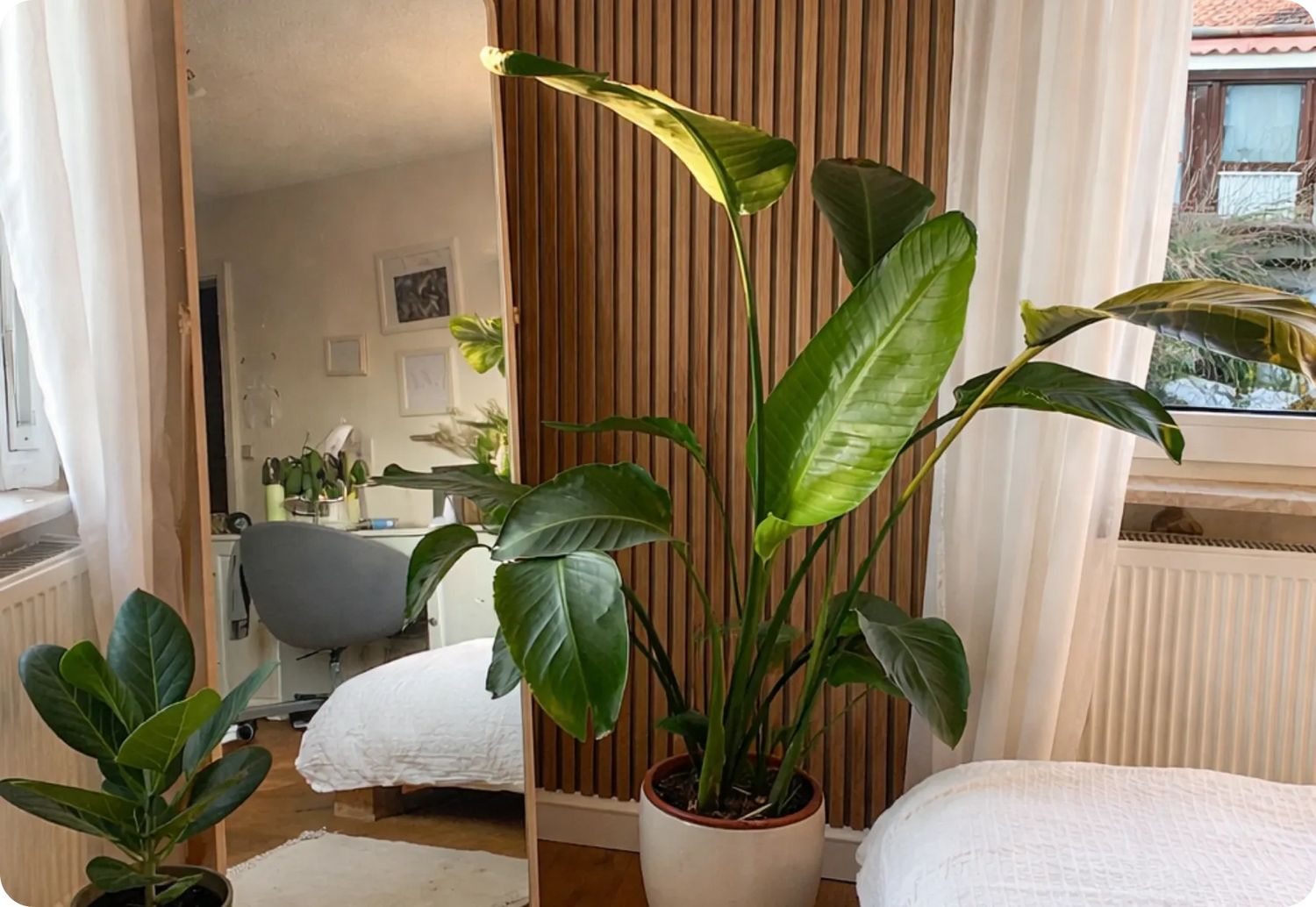
Not the lowest price wins — but the best result per euro
What to Look for Before You Buy
1. Real wood veneer or plastic foil?
This is the single most important quality distinction. Real wood veneer looks and feels like natural wood, ages beautifully, and can last 15+ years. Plastic foil (PVC-printed decor) may look acceptable from a distance but tends to peel, yellow, and feel artificial over time — typically lasting 5–10 years. Always check what the surface material actually is before buying. More: our materials guide.
2. Felt backing — acoustic or just decorative?
If you want your panels to actually improve room acoustics (and not just look good), a felt or fleece backing is essential. Without it, sound bounces off the MDF just like any other hard wall. Many budget panels skip the felt backing entirely — making them purely decorative. Always confirm that acoustic absorption is included. More: panel types comparison.
3. Total cost — not just the panel price
The sticker price per panel doesn't tell the full story. Factor in shipping (large panels often require freight delivery), mounting adhesive, optional screws, and any tools you may need. Some sellers advertise low panel prices but charge significantly more for accessories and shipping. Always calculate the total project cost before comparing.
4. Lifespan — the true price per year
A panel that costs twice as much but lasts three times as long is the cheaper option over time. Real wood veneer panels can last 15+ years without looking dated. Plastic foil panels may need replacing after 5–8 years — meaning you could buy them 2–3 times in the same period. The cheapest purchase is often the one you don't have to repeat. More: sustainability guide.

Common Mistakes That Cost Money
❌ Ordering the wrong color
The most expensive mistake — and the most avoidable. Return shipping for 242 cm panels is typically expensive and cumbersome. Every monitor shows wood tones differently, so what you see on screen may not match reality. Solution: always order a free sample box first. It costs nothing and can save you a significant amount in returns.
❌ Buying panels without felt backing
Some budget panels look similar to acoustic panels but lack the felt backing — meaning they provide little to no sound absorption. If acoustic improvement is part of why you're buying, always confirm the backing material. Without it, you may end up buying separate absorbers later — costing more in total.
❌ Forgetting about transport
Full-height panels (242 cm) don't fit in a normal car. If buying from a physical store, you may need to rent a van or trailer. When buying online, panels are typically delivered by freight directly to your door — which can actually be more convenient and sometimes cheaper than a rental.
❌ Over-ordering "just in case"
Every unused panel is wasted money. The calculation is simple: wall width ÷ panel width = quantity (round up). With vertical installation, there's typically no waste except the last panel, which is cut to width. More: size calculator.
5 Tips for the Best Value
💡 1. Sample box before purchase
The most cost-effective step you can take. A free sample box lets you test all colors in your own lighting, against your own wall, next to your own furniture — morning and evening. It prevents the single most expensive mistake: choosing the wrong color and having to return or re-order.
💡 2. Calculate the exact quantity
Wall width in cm ÷ panel width = number of panels (round up). Don't buy "extra just in case" — with vertical installation, waste is minimal. The size calculator shows the exact calculation for every wall width.
💡 3. Order everything together
Panels + adhesive + screws in one order can save on shipping costs versus ordering accessories separately later. Check what's available and bundle everything upfront.
💡 4. Accent wall, not full coverage
You don't need to cover every wall. A single accent wall (6–8 panels) can deliver a large portion of the visual and acoustic impact for a fraction of the cost of full room coverage. Most rooms benefit most from treating one key wall — typically the wall behind the sofa, bed, TV, or desk. More: top 5 projects.
💡 5. Don't save on material — save on time
Cheap plastic panels may look acceptable initially but tend to deteriorate within a few years — peeling, yellowing, or looking dated. Real wood veneer panels can last 15+ years and often look better with age (patina). The investment in quality material tends to pay for itself through longevity alone. More: our materials guide.

Buying Online vs In-Store
| Consideration | Physical store | Online direct |
|---|---|---|
| See & touch before buying | ✅ In person | ✅ Free sample box |
| Material quality | Varies — often plastic foil | Depends on brand — check veneer type |
| Color selection | Typically limited (2–4 tones) | Often wider selection + variants |
| Transport | Self-pickup (van needed for 242 cm) | Delivered to your door |
| Accessories | Search separately in store | Often bundled in one order |
| Guidance | General in-store staff | Specialized guides, FAQs, articles |
Frequently Asked Questions
Three things: 1) Is the surface real wood veneer or plastic foil? 2) Does the panel include a felt or fleece backing for acoustic absorption? 3) What's the total cost including accessories and shipping? These three factors determine whether you're getting genuine value or just a low sticker price. More: our materials guide.
Short-term: they can save money upfront. Long-term: often not. Budget panels without felt backing provide no acoustic benefit. Plastic foil surfaces tend to peel and yellow within 5–8 years. Over 15 years, a quality panel that doesn't need replacing often costs less in total than 2–3 rounds of budget alternatives.
It depends on the panel quality, wall width, and accessories needed. A typical 3 m wall requires 6 panels plus adhesive. The range is wide — from budget plastic to premium veneer. The best approach: calculate your exact wall width, check the total cost including accessories and shipping, and compare like-for-like materials. More: cost guide.
In most cases: yes. Real wood veneer looks and feels like natural wood, ages gracefully (patina vs. yellowing), and can last 15+ years. Plastic foil typically lasts 5–10 years. Over the full lifespan, veneer can actually be the more economical choice — and it looks better from day one. The difference is especially visible and tactile in person: order the free sample box and compare.
Ordering the wrong color without testing first. Returning 242 cm panels is expensive and inconvenient. The solution is simple: order the free sample box, test all colors in your own lighting, then order with confidence. It costs nothing and can save significant hassle and expense.
Conclusion: Smart Buying Means Buying Right Once
The best price is not the lowest — it's the one where quality, acoustic function, and longevity come together at a fair cost. Real wood veneer with a felt backing, ordered in the right quantity with the right color (tested first with a sample box), delivered to your door with all accessories — that tends to be the smartest purchase you can make. One order, one afternoon of installation, and a result that can last 15+ years.
Prices and availability may vary. Always check the product page for current pricing. Material quality, acoustic performance, and lifespan depend on the specific product and conditions of use. Information in this article is intended as general guidance for making informed purchasing decisions.


Napsat komentář
Tento web je chráněn službou hCaptcha a vztahují se na něj Zásady ochrany osobních údajů a Podmínky služby společnosti hCaptcha.