




From foam pyramids to real wood slat panels — how to find the right acoustic solution for your space
The 4 Types of Acoustic Panels
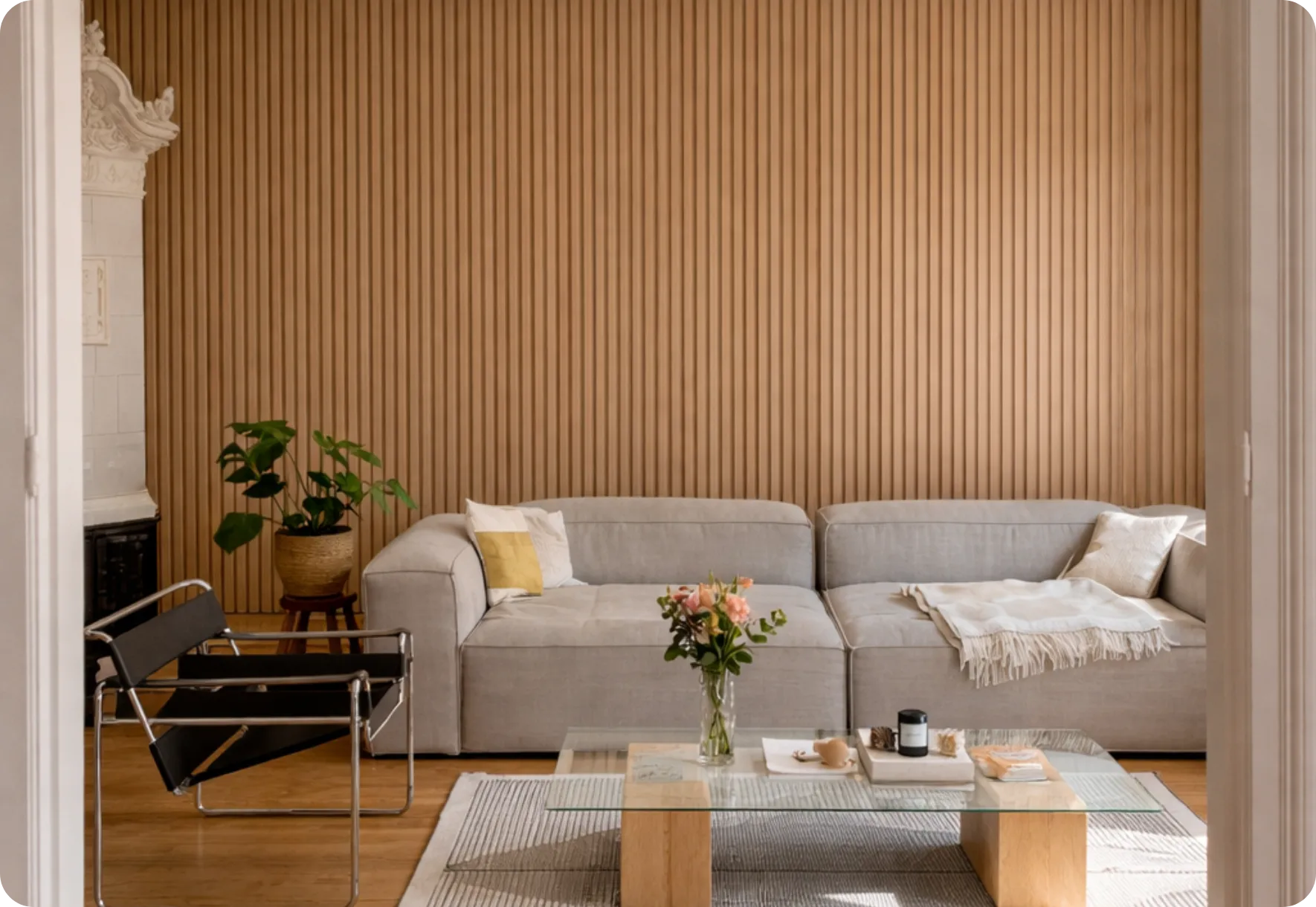
1. Wood slat panels (acoustic panels) ⭐
Vertical wooden slats mounted on an MDF core with a felt or fleece backing. The slats can help scatter sound (diffusion), while the felt helps absorb it (absorption). A combination of design and function.
Typical absorption range: can reach around NRC 0.6 under test conditions (with felt backing)
Appearance: ⭐⭐⭐⭐⭐ — looks like a designer wall, not an acoustic product
Price: €30–45 per panel (Silentwood from €20.99)
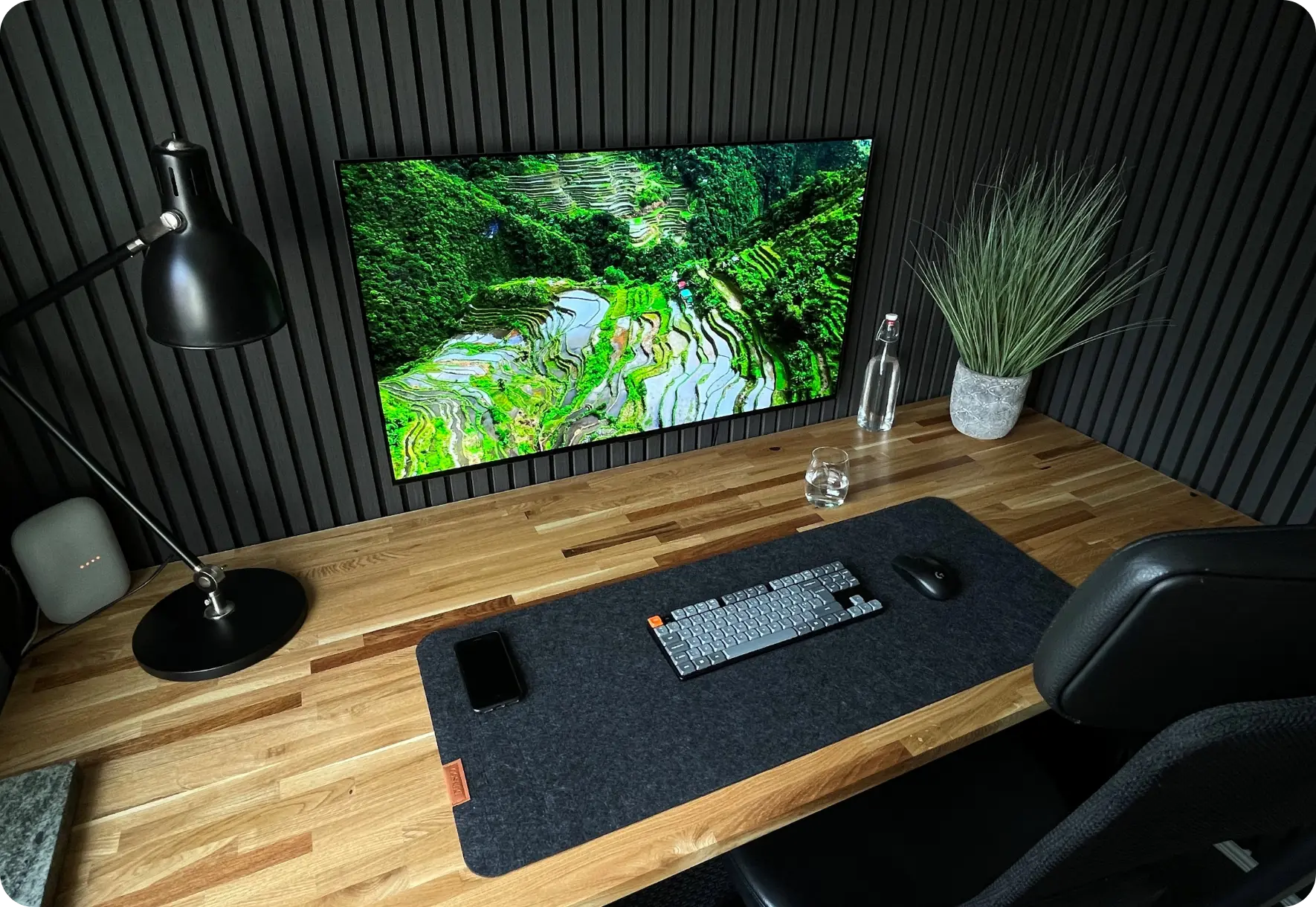
Often ideal for: Living rooms, bedrooms, hallways, home offices — anywhere acoustics and aesthetics matter equally
More: Wood acoustic panels
2. Polyester felt panels (PET felt)
Pressed panels made from recycled polyester, often available in bright colors or geometric shapes. Pure absorbers without decorative wood surfaces.
Typical absorption range: can reach around NRC 0.7–0.9 (often the highest absorption in this list)
Appearance: ⭐⭐⭐ — functional, modern, but clearly recognizable as an acoustic product
Price: €20–60 per panel (50 × 50 cm or 60 × 120 cm)
Often ideal for: Offices, conference rooms, classrooms — spaces where acoustics matter more than aesthetics
3. Foam absorbers
The classic pyramid or wedge foam panels made of melamine resin or PU foam. Maximum absorption, minimal aesthetics. Common in recording studios and YouTube setups.
Typical absorption range: can reach around NRC 0.8–0.95 (among the highest available)
Appearance: ⭐ — "studio look". In living spaces it can feel temporary and unattractive
Price: €10–15 per panel (50 × 50 cm)
Often ideal for: Recording studios, podcast booths, rehearsal rooms — generally not for living spaces
4. Fabric-covered frames (acoustic pictures)
Wooden or aluminum frames filled with acoustic fleece and covered with fabric. They can look like large pictures or canvases — a discreet acoustic solution.
Typical absorption range: can reach around NRC 0.5–0.8 (depending on filling and depth)
Appearance: ⭐⭐⭐⭐ — subtle, often looks like decoration. Less architectural than wood slats
Price: €45–80 per frame (60 × 120 cm)
Often ideal for: Medical offices, waiting rooms, corporate spaces — unobtrusive acoustics in professional environments
The Big Comparison
| Criteria | Wood slats | PET felt | Foam | Fabric frames |
|---|---|---|---|---|
| Typical NRC range | ~0.6 | ~0.7–0.9 | ~0.8–0.95 | ~0.5–0.8 |
| Residential appearance | ⭐⭐⭐⭐⭐ | ⭐⭐⭐ | ⭐ | ⭐⭐⭐⭐ |
| Texture | Warm, natural | Felt-like, soft | Foamy, light | Fabric, neutral |
| Installation | Adhesive / screws | Adhesive / screws | Adhesive / tape | Screws / hanging system |
| Cleaning | Wipe dry/damp | Vacuum | Difficult | Vacuum |
| Price per m² | €20–35 | €30–80 | €5–20 | €40–110 |
Which Type for Which Room?
Living room, bedroom, hallway: Wood slat panels. In living spaces, appearance often matters just as much as acoustics. Foam pyramids in the living room? Usually not an appealing option. Wood slats tend to be the solution that combines both.
Home office: Wood slat panels (behind the desk for video calls) or fabric-covered frames (more discreet, but with less design impact).
Recording studio / podcast: Foam or PET felt can provide maximum absorption. Wood slats can be used as a supplement for diffusion — the slatted structure can help scatter sound and may prevent the "dead room" effect of pure absorbers.
Office / conference room: PET felt or fabric-covered frames tend to work well — professional, functional, discreet. For representative reception areas: wood slats are often a strong choice.
Restaurant / hospitality: Wood slats can work well for dining areas (design + acoustics), while PET felt can be used on ceilings (less visible, with high absorption potential). More: Acoustic panels in restaurants.
Absorption vs Diffusion — What's the Difference?
Absorption = sound is "swallowed" (converted into heat). Helps reduce reverberation. This is what felt backing, PET felt, and foam do.
Diffusion = sound is scattered in different directions instead of reflecting directly. Helps reduce echoes and flutter echoes without making the room acoustically "dead". This is what wooden slats can do.
Wood slat panels are among the few products that can combine both: the grooves diffuse, the felt absorbs. This can create a natural, pleasant acoustic environment — neither too echoey nor too dead. In recording studios, this combination is often intentionally used because it can produce a more natural sound impression. More on the technology: How good are acoustic panels really?
Frequently Asked Questions
For living spaces: wood slat panels with felt backing — they can offer a strong combination of design and acoustic properties. For pure acoustic optimization (studio, office): PET felt panels tend to absorb more. For budget solutions: foam can offer high absorption at low cost, though with limited aesthetics. Silentwood offers real wood slat panels from €20.99 per panel.
A common rule of thumb: cover around 15–25% of the wall surface with absorbers. In a 20 m² room (about 40 m² wall area), this can mean 6–10 m² of panels — either one full accent wall or partial sections across multiple walls. For a single accent wall (3 m × 2.4 m = 7.2 m²): approximately 6 Silentwood panels.
Foam typically absorbs more sound, but wood slats can also provide diffusion — which can make the sound feel more natural. In living spaces, wood is often the preferred choice: a similar perceived improvement with considerably better aesthetics. Foam tends to belong in studios, not living rooms.
Yes — and it can be acoustically beneficial. Wood slats on the walls (absorption + diffusion) combined with PET felt on the ceiling (higher absorption) can provide a strong overall result. This combination is often used in professional environments (studios, conference rooms).
Wood slats: mounting adhesive and/or screws. PET felt: mounting adhesive or clips. Foam: spray adhesive or double-sided tape. Fabric frames: screws + wall plugs (like picture frames). The installation guide explains all details for wood slats.
Conclusion: For Living Spaces, Wood Tends to Stand Out
There are many types of acoustic panels — but wood slat panels are often the ones that make guests ask "Wow, where did you get that wall?" instead of "Do you have an acoustics problem?". For residential spaces, the combination of design and function can be hard to beat. Foam and PET felt have their place in studios and offices — ideally as a complement to wood slats.
NRC values shown are general industry ranges for product categories, not guaranteed specifications for specific products. Acoustic performance depends on many factors including room size, materials, placement and coverage. Prices mentioned correspond to the current prices at the time of publication and are subject to change.


Leave a comment
Ovo je web-mjesto zaštićeno sustavom hCaptcha, čija pravila zaštite privatnosti i uvjeti pružanja usluge vrijede.