



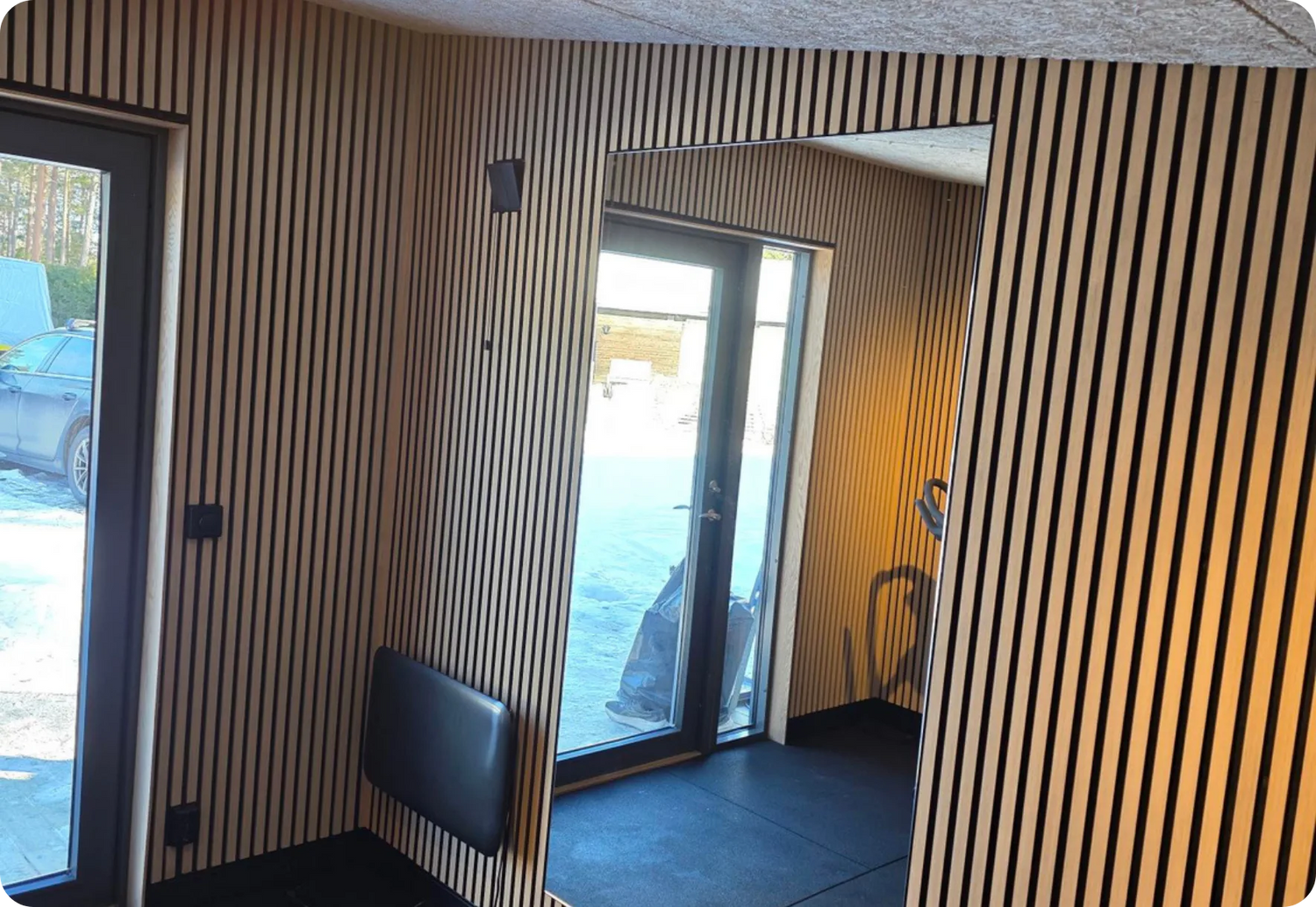
Two terms that are constantly confused - but require completely different solutions
🔇 Sound Absorption
What happens: Sound is absorbed (converted into heat)
Where it works: Inside the room
Result: Less echo, clearer speech, calmer atmosphere
Typical solution: Acoustic panels, felt, foam, carpets, curtains
Metric: NRC (0-1, higher = more absorption potential)
🧱 Sound Insulation
What happens: Sound is blocked (cannot easily pass through the wall)
Where it works: Between two rooms
Result: Neighbors hear less, street noise is reduced
Typical solution: Mass (concrete, gypsum, double walls), decoupling, mineral wool
Metric: Rw (dB, higher = better insulation)
The Analogy: Sponge vs. Wall
Think of sound like water:
Absorption = a sponge. You place a sponge on the floor - it can absorb the water it touches. Fewer puddles in the room. But the sponge does not keep water confined to one area - it can still spread if there is enough pressure.
Insulation = a wall. You build a wall between two areas - water cannot easily pass through. On your side, it stays dry no matter how much water is on the other side.
Acoustic panels are sponges - they can absorb sound floating around the room. But they generally do not stop sound from passing through the wall to your neighbor. For that, you typically need a wall - or at least a thicker one.
What Do You Need? The Decision Test
| Your problem | This is... | The solution |
|---|---|---|
| My living room echoes | Absorption problem | ✅ Acoustic panels (6-8 pcs.) |
| Speech is unclear on tiled floors | Absorption problem | ✅ Acoustic panels + rug |
| My microphone sounds echoey in calls | Absorption problem | ✅ 3-4 panels behind desk |
| I hear music from my neighbor | Insulation problem | 🧱 Stud wall (gypsum + mineral wool) |
| Street noise comes through the window | Insulation problem | 🧱 Soundproof window |
| My child hears my TV in the next room | Insulation problem | 🧱 Heavy door + possibly stud wall |
| Open kitchen is too loud in the living area | Both possible | ✅ Panels + room divider |
| Home office in rental, partner on calls | Absorption + insulation | ✅ Panels help partially, room dividers can add improvement |
| Impact noise from floor above | Insulation problem (structure-borne) | 🧱 Impact sound insulation on upper floor |
The Physics Behind It (Simplified)
Why does felt absorb sound? Sound waves are essentially air movements. When these air movements pass through the fine fibers of felt, kinetic energy can be converted into heat through friction. The heat is so minimal you don't feel it - but the sound energy is gone. That's why porous, fibrous materials (felt, fleece, foam, wool) tend to work well as absorbers.
Why does mass block sound? To make a heavy wall vibrate, sound needs a lot of energy. The heavier the wall, the less sound tends to pass through. A 24 cm concrete wall (Rw ~55 dB) can block the vast majority of airborne sound. A gypsum board wall (Rw ~35 dB) lets significantly more through. Thin acoustic panels add very little mass - therefore they generally don't insulate.
Why do you sometimes need both? Many rooms have both problems: the room echoes (absorption problem) AND external noise enters (insulation problem). Panels can help with the echo - and that can make external noise feel less disturbing because there is less additional room reverberation. But the root cause (thin walls) remains.
Can Acoustic Panels Actually Insulate?
Combination: Absorption + Partial Insulation
In rental apartments, where structural changes are limited, you can combine absorption and partial insulation:
Wall to neighbor: A heavy bookshelf (full of books = mass) placed against the shared wall, with acoustic panels in front for room echo. The shelf can add considerable mass per m² - potentially contributing a few dB of improvement.
Heavy curtains over windows: Can help reduce outside noise (typically 3-7 dB depending on thickness) while also absorbing sound in the room.
Rug + panels: The rug can absorb floor reflections, the panels handle wall reflections - together they cover two of the most important reflective surfaces. Reverberation time can potentially drop noticeably.
Frequently Asked Questions
Absorption = sound inside the room is absorbed (less echo). Typical solution: acoustic panels, felt, foam. Insulation = sound is prevented from passing through walls (less neighbor noise). Typical solution: heavy materials (concrete, gypsum, mineral wool). Acoustic panels can absorb but generally do not insulate.
Typically only marginally (around 1-2 dB, usually not audibly noticeable). For neighbor noise, mass tends to be what helps most: a stud wall (gypsum board + mineral wool) can potentially improve insulation significantly. Panels can improve room acoustics, which may make overall noise feel more pleasant subjectively.
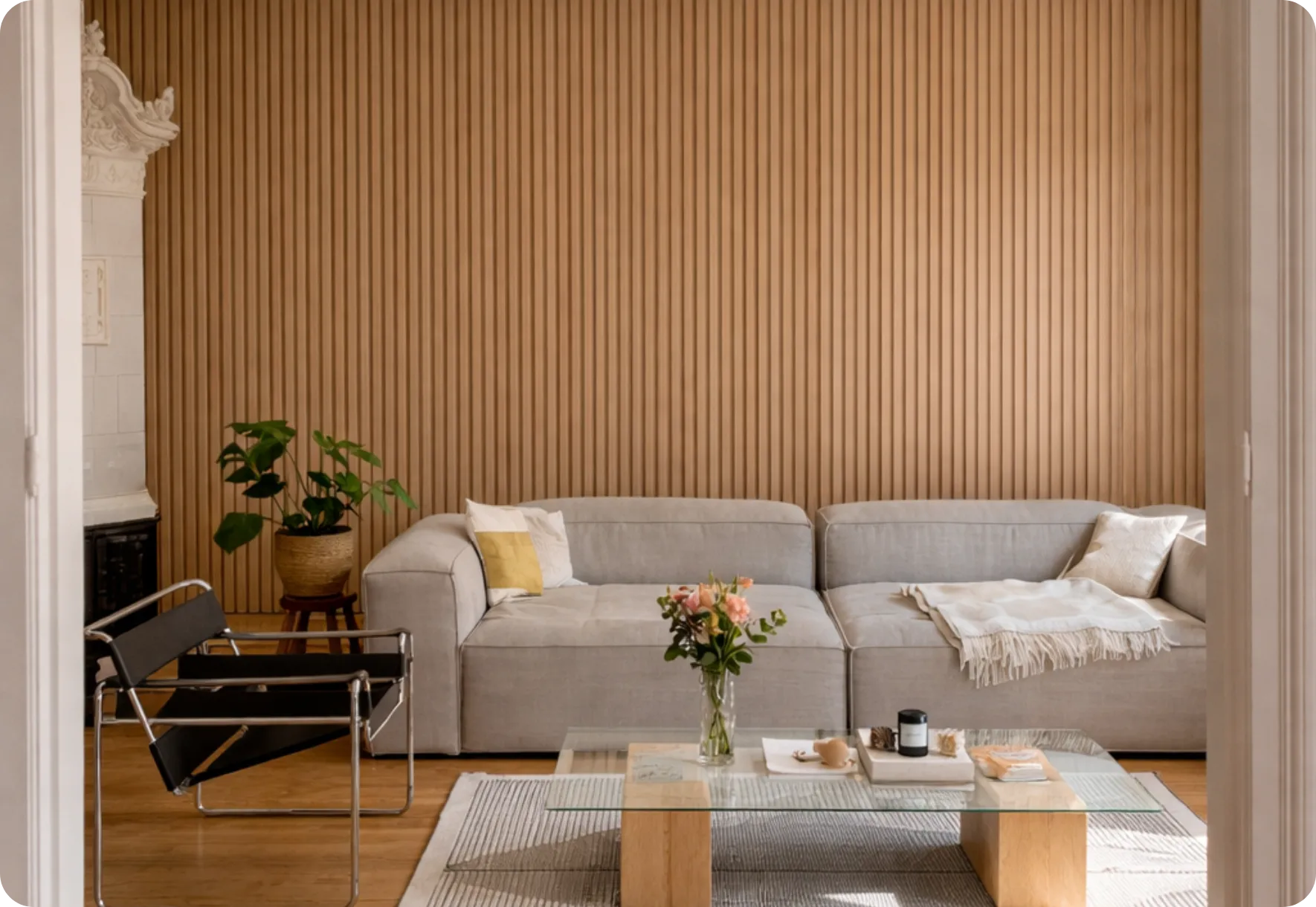
Sound absorption. Acoustic panels with felt backing are often the most effective and visually appealing solution for living spaces. An accent wall with 6-8 panels can help reduce reverberation meaningfully. Adding a rug can enhance the effect. More: wood acoustic panels.
Yes - and it's often recommended. Example: stud wall on the shared wall (insulation), then acoustic panels on top (absorption). This approach can reduce incoming noise AND internal reflections. In rentals: a heavy bookshelf against the wall (makeshift mass) + panels in the room is a practical alternative.
NRC (Noise Reduction Coefficient) measures absorption: how much sound a material can potentially absorb under test conditions. Scale 0-1, higher = greater absorption potential. Rw (weighted sound reduction index) measures insulation: how much sound a wall can block. Measured in dB, higher = better. 24 cm concrete wall: Rw ~55 dB.
Conclusion: Identifying the Right Problem = Finding the Right Solution
The most important question before any acoustic project: does my room echo (→ absorption, panels can help) or do I hear my neighbor (→ insulation, panels help very little)? Answering this correctly can save money, time, and frustration. For the most common residential issue - echo in modern homes with hard surfaces - wood acoustic panels tend to be a strong solution.
Acoustic performance depends on many factors including room size, materials, placement and coverage. Results may vary between installations. NRC and Rw values referenced are general industry values and do not constitute guaranteed specifications for specific products. Prices mentioned in this article correspond to the current prices at the time of publication and are subject to change.



Leave a comment
Ovo je web-mjesto zaštićeno sustavom hCaptcha, čija pravila zaštite privatnosti i uvjeti pružanja usluge vrijede.